
Who was Abraham, the man three faiths call their father? Abraham stands at the head of three religious traditions. Jews call him Avraham avinu, “our father Abraham”; Christians honour him as the father of all who believe; Muslims revere Ibrāhīm as a prophet and the builder of the Kaaba. Who was he, and why does he matter so much?
In this article
The biblical account
The book of Genesis tells how Abram, later renamed Abraham, left Ur of the Chaldeans with his family, settled for a time in Harran, and then travelled to Canaan at God’s command. God promised him land, many descendants, and a blessing that would reach all the families of the earth.1 The covenant was sealed with circumcision and described as everlasting, binding God to Abraham and to his offspring after him.2 Sarah, long childless, bore Isaac in old age; Hagar, Sarah’s servant, bore Ishmael. The narrative reaches its most searching moment when God commands Abraham to offer his son as a sacrifice and then stays his hand.
Abraham in Jewish tradition
Rabbinic literature expands the biblical story. One well-known tradition tells how the young Abraham recognised the one God and broke his father’s idols. Jewish thought treats him as the first to proclaim God’s oneness, as a model of hospitality and of faithfulness under trial, and as the founding patriarch of the people of Israel. Those who enter the covenant by conversion are called sons and daughters of Abraham and Sarah.
Abraham in Christian tradition
The New Testament presents Abraham as the example of faith. The apostle Paul argues that Abraham was counted righteous because he trusted God’s promise, and that all who share that faith, Jew or Gentile, are his children.3 In this reading the covenant is defined by faith, and Abraham becomes a spiritual ancestor as well as a figure in the genealogy of Jesus.
Ibrāhīm in the Qur’an
The Qur’an calls Ibrāhīm a ḥanīf (حنيف, pure monotheist) and khalīl Allāh (خليل الله, friend of God). It describes his rejection of his people’s idols, his trial by fire, and his raising of the foundations of the Kaaba in Makkah with Ismāʿīl.
Because the Torah and the Gospel came after him, the Qur’an holds that he belonged to neither community and calls him a muslim, one who submitted to God.4 The Qur’an does not name the son in the sacrifice narrative; most later Muslim scholars identified him as Ismāʿīl. The annual festival of ʿĪd al-Aḍḥā (عيد الأضحى, the festival of sacrifice) commemorates Abraham’s obedience, and the Qur’an calls Muslims to follow his path, a theme treated in The path of Abraham in the Qur’an.
Abraham in Mandaean tradition
Of the four traditions, Mandaeism alone does not honour Abraham. Its line of prophets runs from Adam through Seth, Noah and Shem and closes with John the Baptist; Abraham has no place in it, and some Mandaean texts describe him as a former priest of the community who broke away from it. The Mandaeans belong to the Abrahamic family by the prophets they share with it and by their history, and they part from the others at the figure the family is named after. See Mandaeism.
The historical question
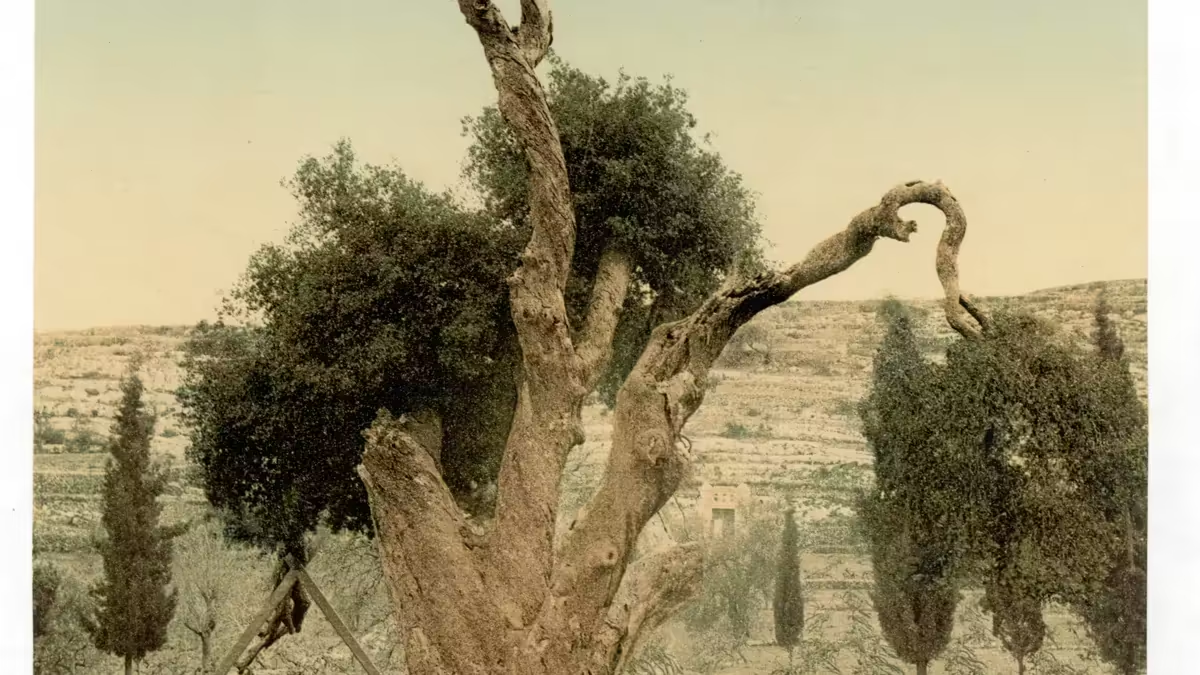
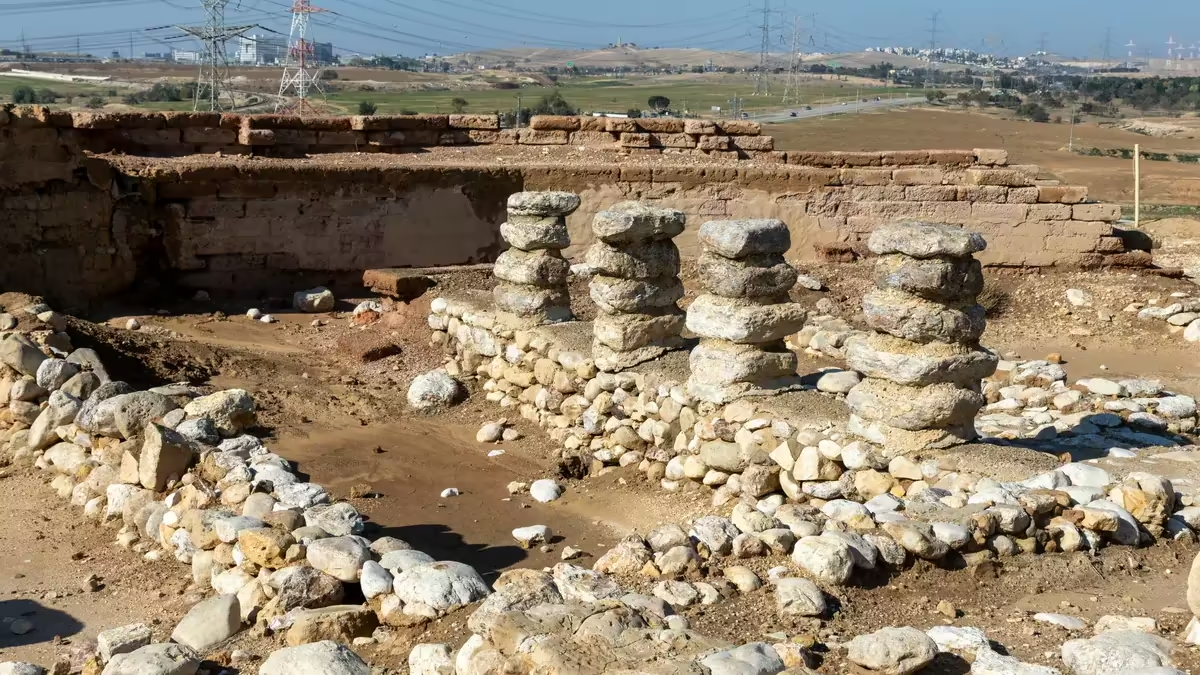
No inscription or document outside scripture mentions Abraham, and historians do not agree on whether, or when, a historical figure lies behind the narratives. Traditional chronologies place him early in the second millennium BCE. Some scholars read the stories as reflecting later periods of Israel’s history, when the memory of a common ancestor served to bind tribes together. What is beyond dispute is the figure’s influence: more than half of humanity belongs to a tradition that looks back to him.
Who was Abraham? In brief
Who was Abraham? He was the man from Mesopotamia whom God called to leave his people and their idols, the father of Ishmael and Isaac, and the forefather whom Jews, Christians and Muslims all claim. For the Qur’an he was neither Jew nor Christian but a ḥanīf, devoted to the one God, and the builder with Ishmael of the Kaaba.
Further reading: Kedar, the Arabs and the prophets and The king and the Pharaoh, Jesus across the traditions, The Abrahamic family tree and what the traditions share, The stations of the Hajj, What language did Abraham speak?, Where was Abraham from?.
Notes
- Genesis 12:1-3. ↩
- Genesis 17:7-14. ↩
- Romans 4:9-12; Galatians 3:7. ↩
- Qur’an 2:127; 21:51-70; 3:67. ↩