
Where was Abraham from? Genesis names Abraham’s birthplace as Ur of the Chaldeans, Ur Kasdim, and says that his father Terah took the family from there to Harran, where Terah died, and that Abraham went on from Harran to Canaan at seventy-five.1 Stephen, in the Book of Acts, adds that God first appeared to Abraham ‘in Mesopotamia, before he lived in Harran’.2 Where Ur lay has been argued over for more than two thousand years, and three places now claim him.
In this article
Ur in the south
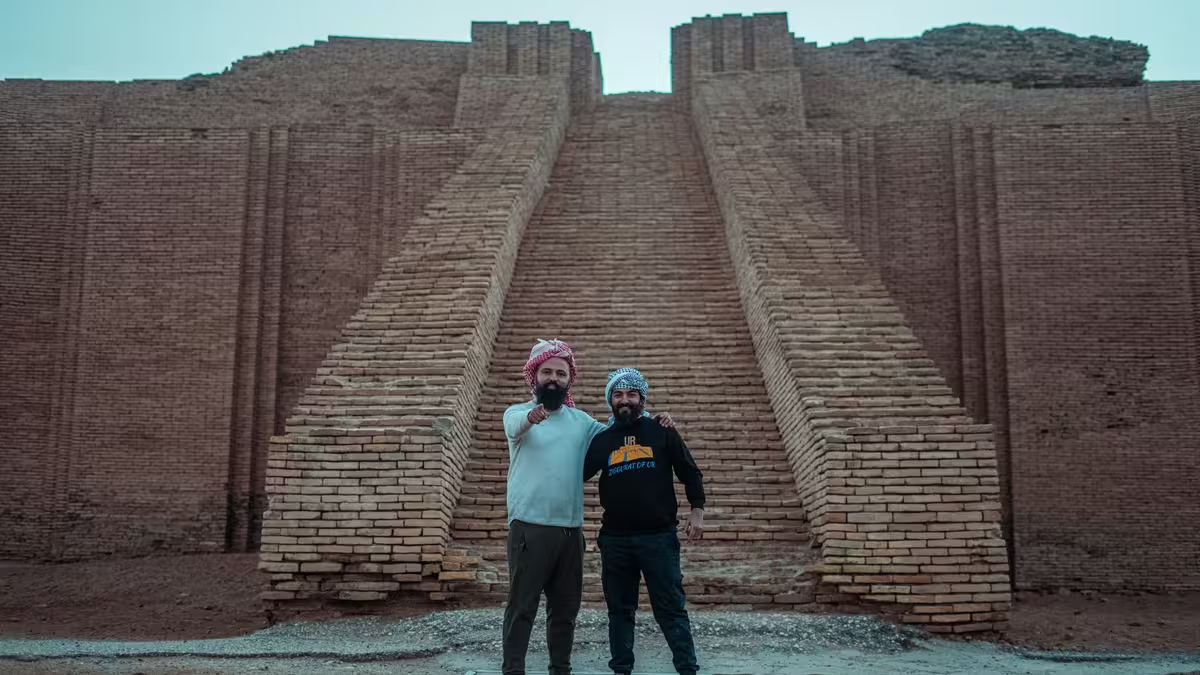
In 1862 Henry Rawlinson identified Ur with Tell el-Muqayyar, a mound near Nasiriyah in southern Iraq, and Leonard Woolley’s excavations there in the 1920s uncovered the Sumerian city and its great ziggurat. Most scholars accept the identification.3 An ancient witness points the same way: the Greek-writing historian known as Pseudo-Eupolemus, quoted by Eusebius, placed Abraham’s birth in the Babylonian city of Camarina, ‘which some call Uria’.4 One difficulty remains. The Chaldeans settled in southern Mesopotamia only in the early first millennium BCE, long after any date proposed for Abraham, so the phrase ‘of the Chaldeans’ reflects the time when Genesis was written down.
Harran and the north
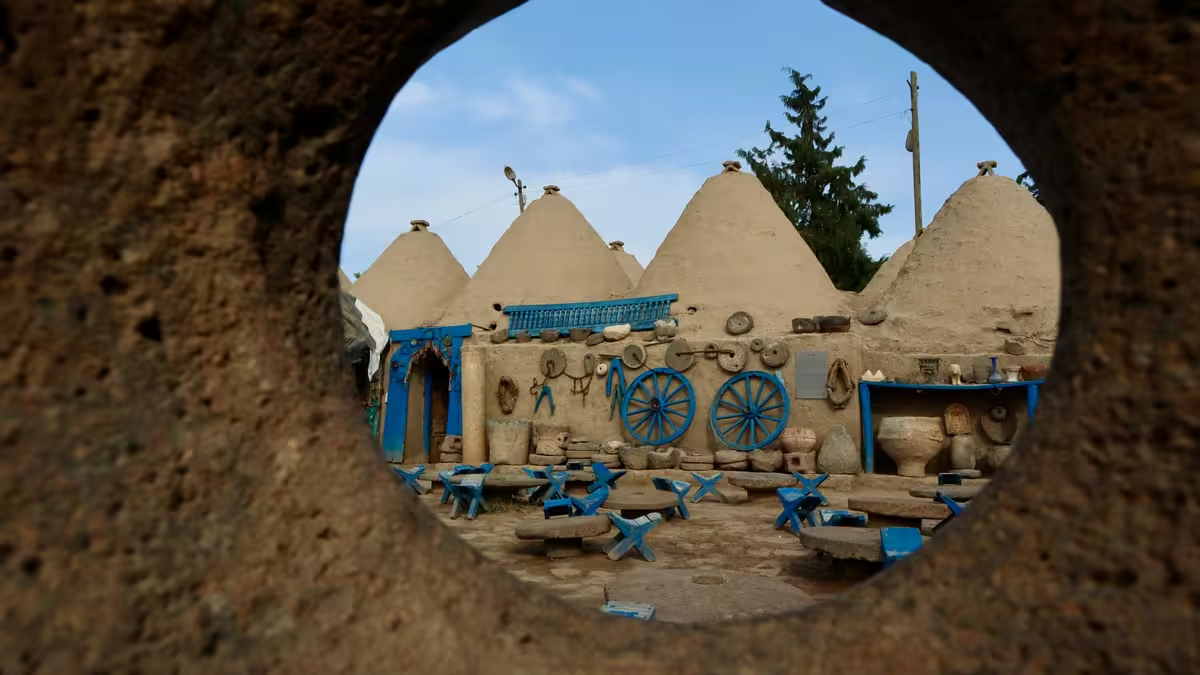
Harran lies far to the north, on the Balikh river in what is now south-eastern Türkiye, and the Bible’s account of Abraham’s kin keeps returning to that region: Nahor’s family stayed there, and Isaac and Jacob both took wives from it. For this reason some scholars, the Assyriologist Cyrus Gordon among them, have placed Ur in the north, near Harran.5 Harran itself later became the city of the Sabians; see The Sabians in classical Muslim scholarship.
Urfa and the Pool of Abraham
About forty kilometres north of Harran stands Şanlıurfa, ancient Edessa, which Jewish, Christian and Muslim tradition have long honoured as Abraham’s birthplace. Pilgrims visit the cave where he is said to have been born, and the pool of Balıklıgöl beside the mosque of Khalil al-Rahman, built by the Ayyubids in 1211.6 Local tradition holds that King Nimrod had Abraham cast into a fire from the citadel above, and that God turned the fire into water and the burning logs into the carp that still fill the pool. Türkiye’s museum authority notes plainly that the association is a tradition that history has not proven.7
The fire that did not burn
The tradition at Urfa is an echo of the Qur’an, which tells how Abraham broke the idols of his people and how they answered him:
قَالُوا۟ حَرِّقُوهُ وَٱنصُرُوٓا۟ ءَالِهَتَكُمْ إِن كُنتُمْ فَـٰعِلِينَ ٦٨
They said, “Burn him and support your gods – if you are to act.”
قُلْنَا يَـٰنَارُ كُونِى بَرْدًا وَسَلَـٰمًا عَلَىٰٓ إِبْرَٰهِيمَ ٦٩
We [i.e., Allāh] said, “O fire, be coolness and safety upon Abraham.”
Qur’an 21:68-698
The Qur’an names neither the city nor the king. What it records is the command to the fire, and the tradition of Urfa has given that command a place: a pool of cool water where the fire had been. Whether Abraham came from Ur in the south or from the country around Harran, the story that matters to the Qur’an happened among his own people, in the land of idols he left behind, and the fire meant to destroy him became coolness and safety.
Where was Abraham from? In brief
Where was Abraham from? Genesis names Ur of the Chaldeans, most often identified with Tell el-Muqayyar in southern Iraq, and places his family afterwards in Harran; the tradition of Urfa in Türkiye also claims him. The Qur’an names no city; it tells of his people, their idols and the fire that did not burn him.
Further reading: Who was Abraham?, What language did Abraham speak?, What archaeology tells us about the ancient Near East.
Notes
- Genesis 11:28-32; 12:4-5. ↩
- Acts 7:2-4. ↩
- Ferrell Jenkins, “Traditions about Abraham at Şanlıurfa, Turkey, Part 1,” 31 July 2016. ↩
- Eusebius, Preparation for the Gospel 9.17, quoting Alexander Polyhistor. ↩
- Jenkins, op. cit.; Genesis 24:10; 28:2. ↩
- “Pool of the Sacred Fish (Sanliurfa),” Madain Project. ↩
- “Şanlıurfa and the Legend of Balıklıgöl,” Turkish Museums, 26 December 2023. ↩
- Qur’an 21:68-69, trans. Saheeh International; Arabic text from Quran.com. ↩