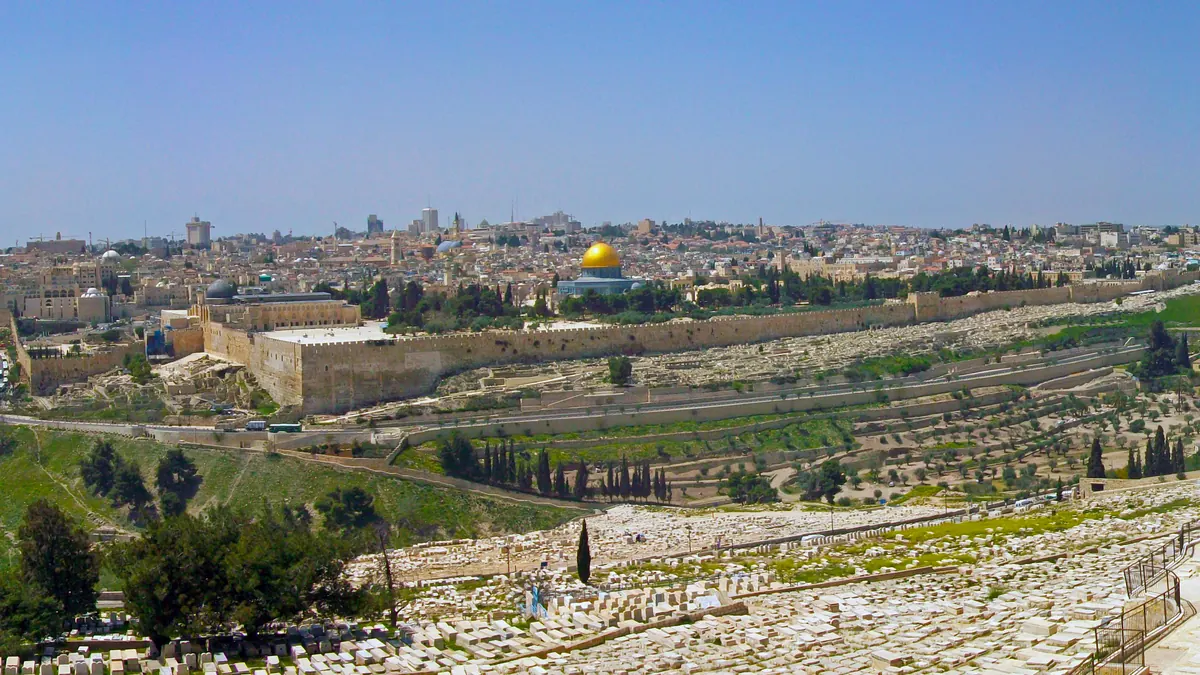
Few places carry as much religious meaning as Jerusalem. For three thousand years it has been a focus of prayer, pilgrimage and conflict, and the ground at its centre, the Temple Mount or al-Ḥaram al-Sharīf (الحرم الشريف, the Noble Sanctuary), is claimed by more than one tradition at once.
In this article
The city of David and the Temple
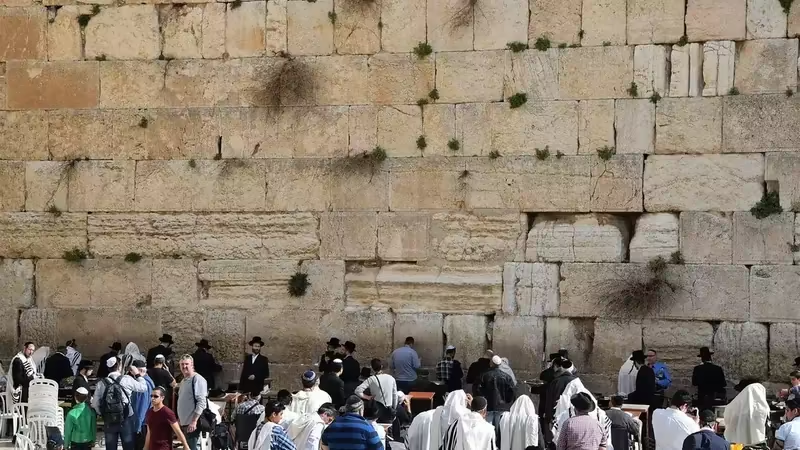
According to the Hebrew Bible, King David made Jerusalem his capital around 1000 BCE, and his son Solomon built the First Temple there. The Babylonians destroyed it in 586 BCE. The Second Temple, completed in 516 BCE and rebuilt on a grand scale by Herod the Great, stood until the Roman destruction of 70 CE. The Western Wall, part of Herod’s retaining wall, is today the holiest place where Jews pray. Jewish law gives the city a standing no other place holds: prayer outside it is directed towards it, and the liturgy keeps the hope of return to Zion in daily use.
The city of the cross and the empty tomb
Christians remember Jerusalem as the place where Jesus taught in the Temple courts, was arrested, crucified and, they believe, rose from the dead. The Last Supper, the trial, the crucifixion and the resurrection all belong to this city, which is why it has drawn pilgrims from the earliest centuries. In the fourth century the emperor Constantine built a church over the traditional site of the tomb, the origin of today’s Church of the Holy Sepulchre, whose custody several ancient churches share.
The city of the Night Journey
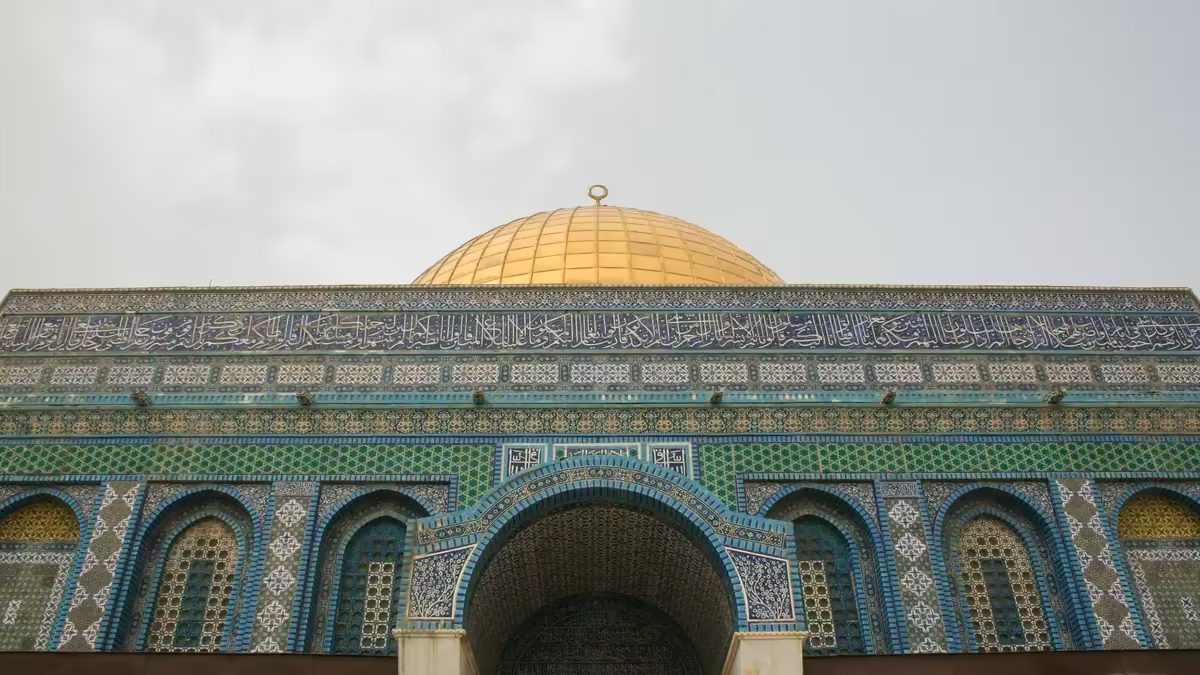
Muslims call the city al-Quds (القدس, the Holy) and count it the third holiest after Makkah and Madinah. The Qur’an speaks of God carrying his servant by night to “the farthest mosque”, which Muslim tradition identifies with Jerusalem; from there, tradition holds, the Prophet was raised through the heavens.1 Jerusalem was also the first qiblah (قبلة, direction of prayer) before the direction turned to Makkah.2 The Dome of the Rock, completed in 691 or 692 under the Umayyad caliph ʿAbd al-Malik, and the nearby al-Aqṣā Mosque stand on the sanctuary today, and the city is remembered in Muslim tradition as a city of prophets.
A shared and contested city
Jerusalem passed through Byzantine, early Islamic, Crusader, Ayyubid, Mamluk and Ottoman rule before the modern era, and the twentieth century added new divisions and claims. Its sacred sites lie within a few hundred metres of one another, and questions of access and sovereignty remain among the most sensitive in the world. Understanding what the city means to each tradition is a first step toward understanding why.
Further reading: Interfaith dialogue in the modern era, What archaeology tells us about the ancient Near East and Who was Abraham?.
Notes on Jerusalem
- Qur’an 17:1. ↩
- Qur’an 2:142-144. ↩