Certain places carry meaning for more than one tradition, and several have been contested for centuries. The sites below are those the four traditions hold most sacred, from the Temple Mount in Jerusalem to the rivers where the Mandaeans baptise.
In this article
Places: jerusalem
Sacred to Judaism, Christianity and Islam. For Jews it is the city of the Temple, whose Western Wall remains a place of prayer. For Christians it is where Jesus was crucified and, they believe, rose from the dead; the Church of the Holy Sepulchre marks the site. For Muslims it holds al-Masjid al-Aqṣā (المسجد الأقصى, the Farthest Mosque) and the Dome of the Rock, associated with the Prophet’s Night Journey, and it was the first direction of Muslim prayer before the qiblah turned to Makkah.1 See Jerusalem in three traditions.

Hebron
Genesis tells how Abraham bought the cave of Machpelah at Hebron to bury Sarah, and it became the family tomb of the patriarchs.2 The cave lies within massive walls built in the first century to protect the tombs of Abraham and his family, and the site became a place of pilgrimage for Jews, Christians and Muslims alike; Muslims know it as al-Ḥaram al-Ibrāhīmī, the Sanctuary of Abraham. The old town around it was rebuilt in local limestone under the Mamluks between 1250 and 1517, and UNESCO inscribed it as a World Heritage site in 2017.3 The city’s Arabic name, al-Khalīl, is Abraham’s own title in Islam: the Friend of God.

Bethlehem
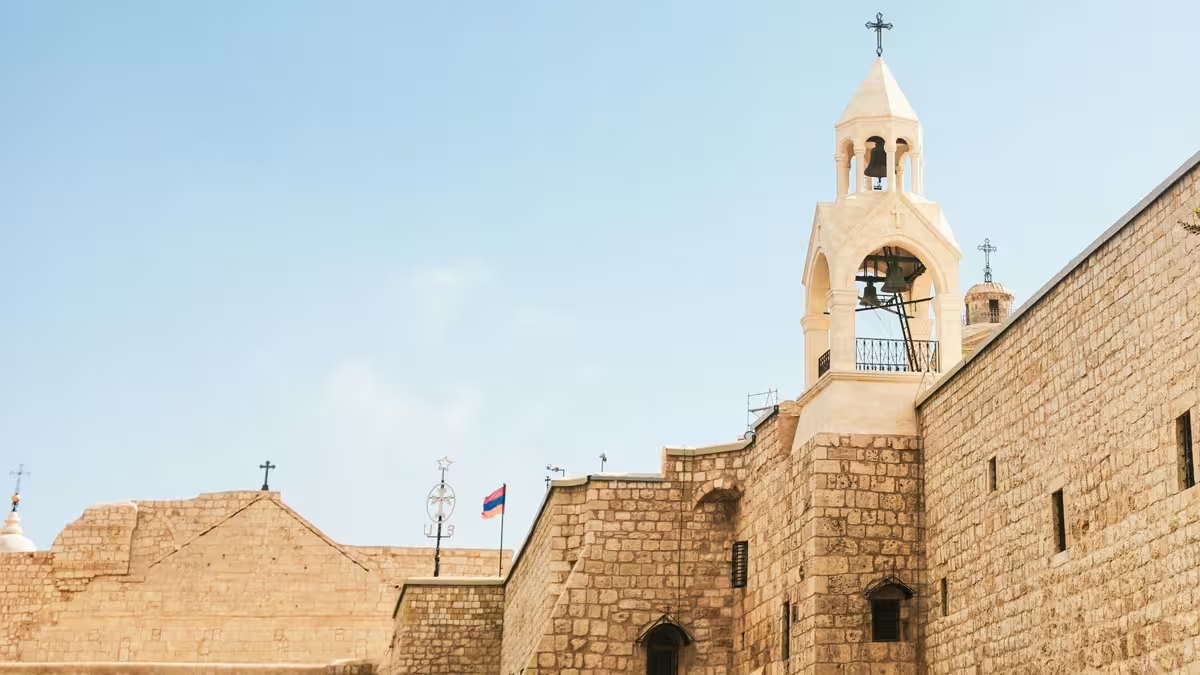
Ten kilometres south of Jerusalem, Bethlehem is the town of David’s family in the Hebrew Bible and, in the Gospels, the birthplace of Jesus.4 Christian tradition has placed the birth in a cave there since at least the second century. The first Church of the Nativity was completed over it in 339; the church that replaced it after a fire in the sixth century still keeps floor mosaics from the first, and Latin, Greek Orthodox, Franciscan and Armenian convents stand around it.5 The Qur’an tells the birth without naming the town: Mary withdrew to a remote place and gave birth beneath a palm tree.6
Nazareth
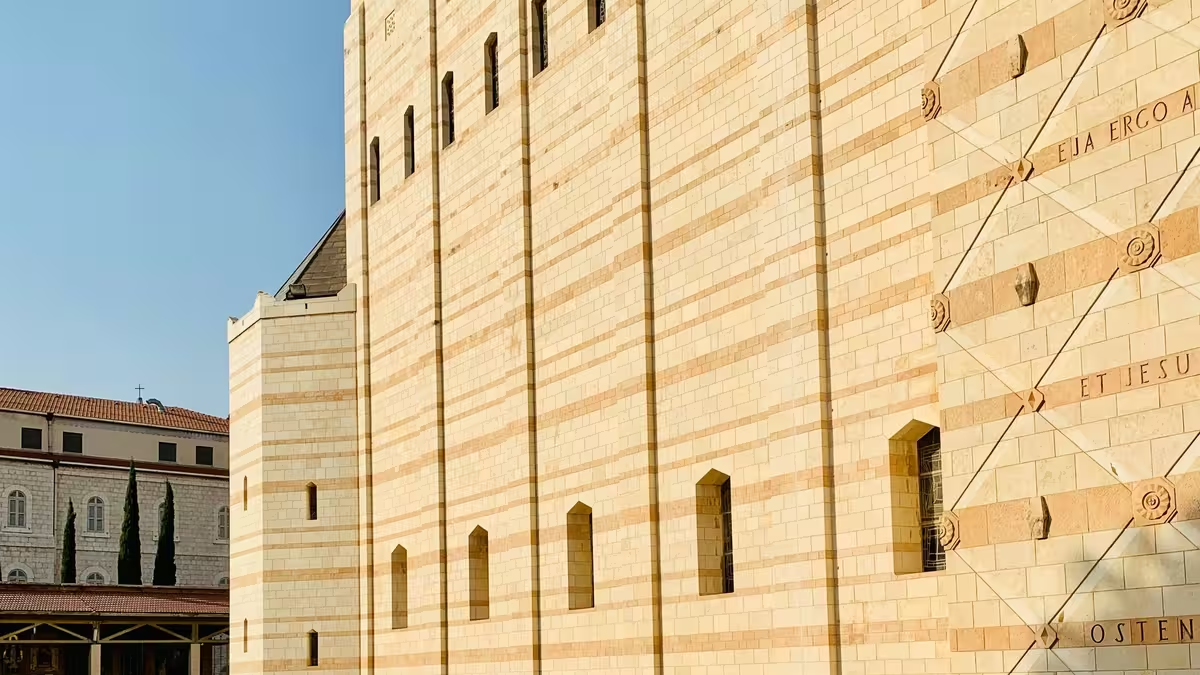
Nazareth in Galilee is the town where Jesus grew up and where, in Luke’s Gospel, the angel Gabriel announced his birth to Mary.7 The Qur’an tells the same annunciation: the angels gave Mary good tidings of a word from God, whose name would be the Messiah, Jesus son of Mary.8 The present Basilica of the Annunciation, designed by Giovanni Muzio and consecrated in 1969, stands on two levels: the upper church follows the outline of the Crusader cathedral, and the lower one enshrines the grotto venerated since Byzantine times. On its completion it was the largest Christian sanctuary in the Middle East.9
Mount Sinai
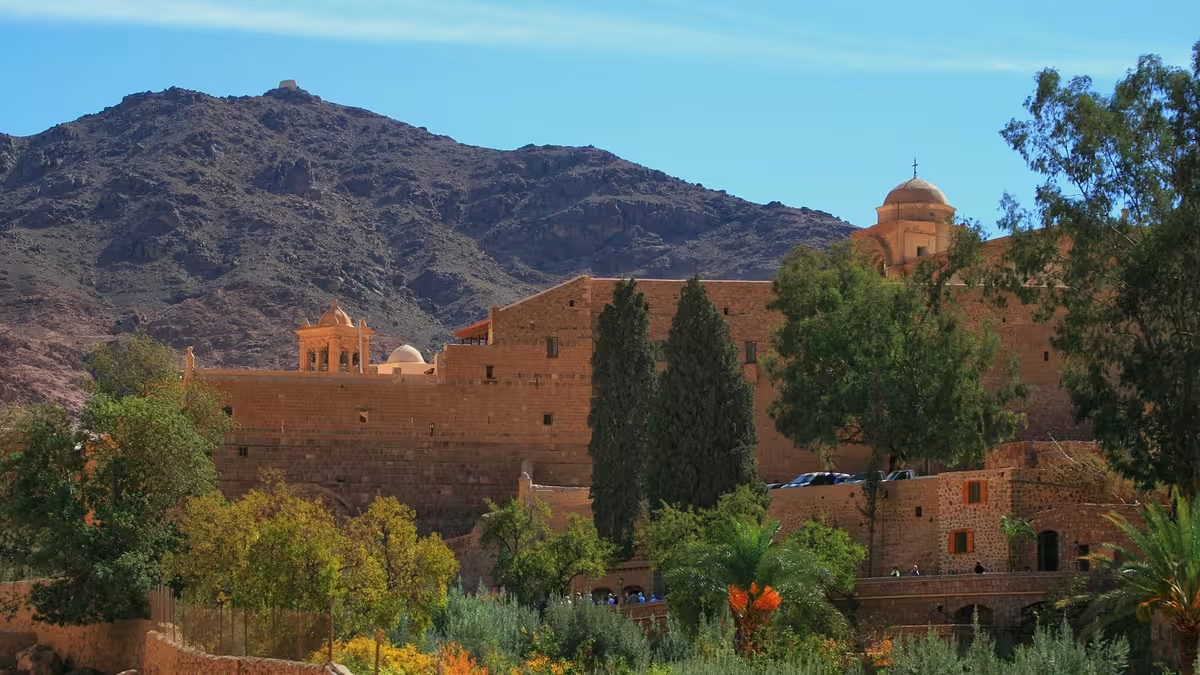
The mountain where, according to the Hebrew Bible, Moses received the law.10 The Qur’an swears by Mount Sinai and tells how God called Moses in the sacred valley of Ṭuwā.11 Tradition identifies the mountain with Jebel Musa in the south of the Sinai Peninsula, though scholars have proposed other locations. At its foot stands the Greek Orthodox Monastery of Saint Catherine, founded in the sixth century and the oldest Christian monastery still used for its original purpose; the whole area, UNESCO notes, is sacred to Judaism, Christianity and Islam.12
The Jordan River
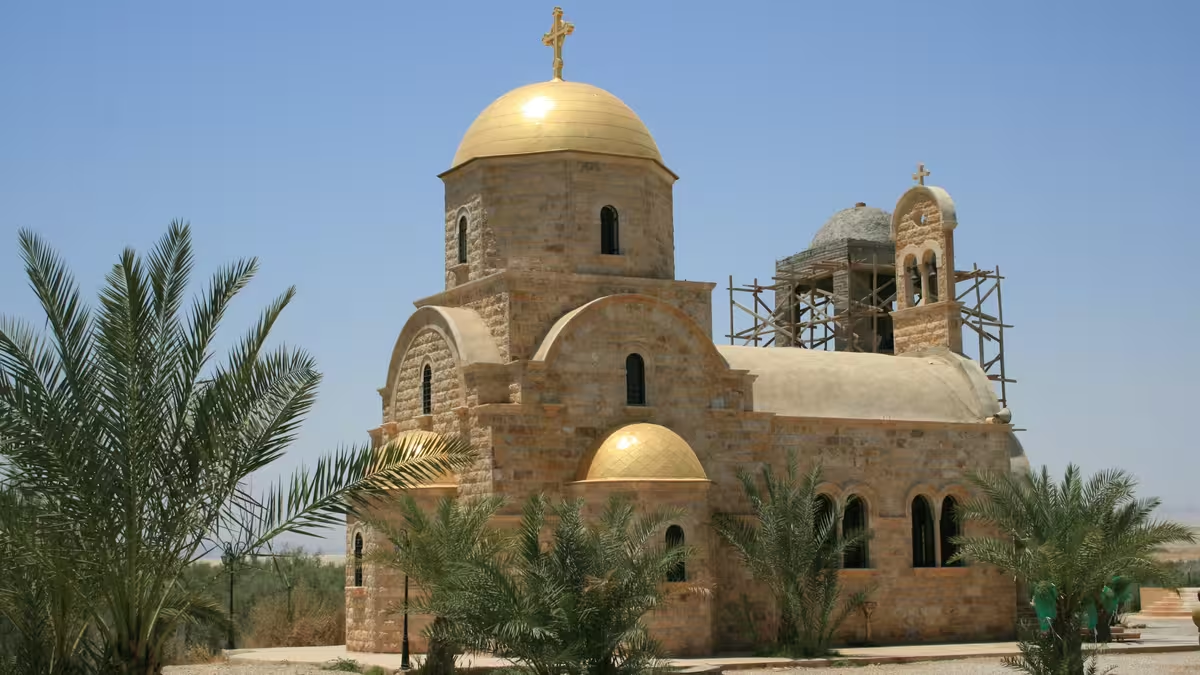
In the Hebrew Bible the Israelites cross the Jordan to enter the land promised to Abraham; in the Gospels John baptises in its waters, and Jesus comes to him to be baptised.13
The site venerated as the place of that baptism, Bethany beyond the Jordan (al-Maghṭas), lies on the east bank north of the Dead Sea; its remains include pools, churches, a monastery and hermits’ caves, and it became a World Heritage site in 2015.14 In Islamic history the Jordan valley holds the shrines of several Companions of the Prophet, among them Abū ʿUbaydah ibn al-Jarrāḥ. Mandaeans call the running water of their baptisms yardna, a word most scholars take from the Jordan, although E. S. Drower doubted the connection.15
Makkah
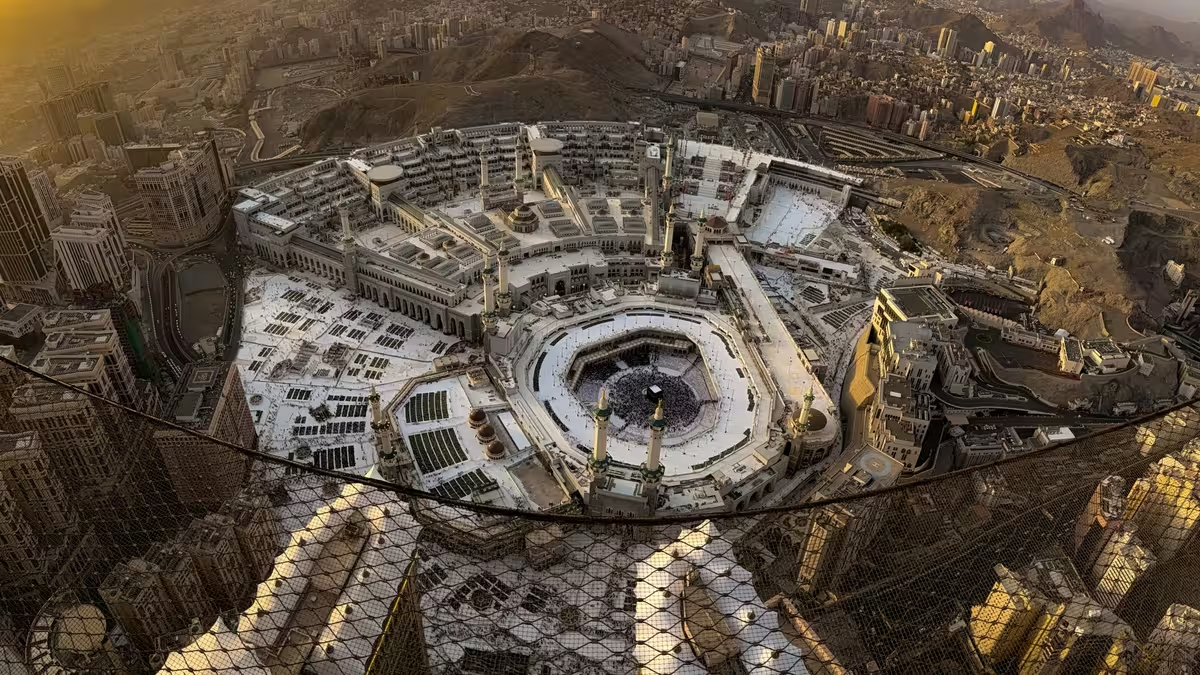
Written Mecca in most English sources, Makkah is the birthplace of Muhammad and the holiest city in Islam. The Qur’an calls its sanctuary the first House of worship established for mankind, at Bakkah, and recounts how Abraham and Ishmael raised its foundations.16 At its centre stands the Kaaba, toward which Muslims everywhere turn in prayer,17 and the Great Mosque around it receives the pilgrims of the Hajj, who go out from the city to Minā, ʿArafāt and Muzdalifah. See The stations of the Hajj.
Madinah
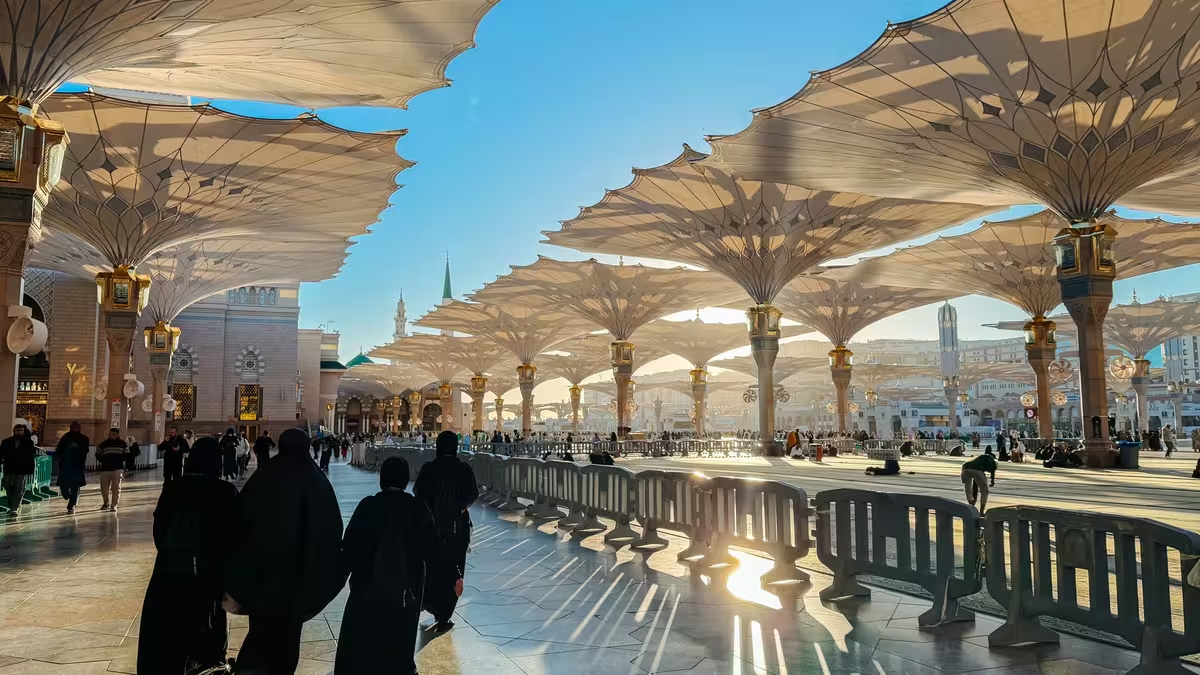
Written Medina in most English sources, Madinah was the oasis town of Yathrib, the name by which the Qur’an still knows it.18 In 622 the Prophet left Makkah for Yathrib, sheltering on the way in a cave with his companion Abū Bakr,19 and the city became the home of the first Muslim community and the capital of the Islamic state until 661. The Prophet is buried in his mosque there, which makes Madinah the second holiest city in Islam; many pilgrims visit it together with the Hajj.20 Its full name, al-Madīnah al-Munawwarah (ٱلْمَدِينَة ٱلْمُنَوَّرَة, the Radiant City), honours him. On its southern edge stands Qubāʾ, the first mosque of Islam; see Ḥirāʾ and Qubāʾ.
Vatican City
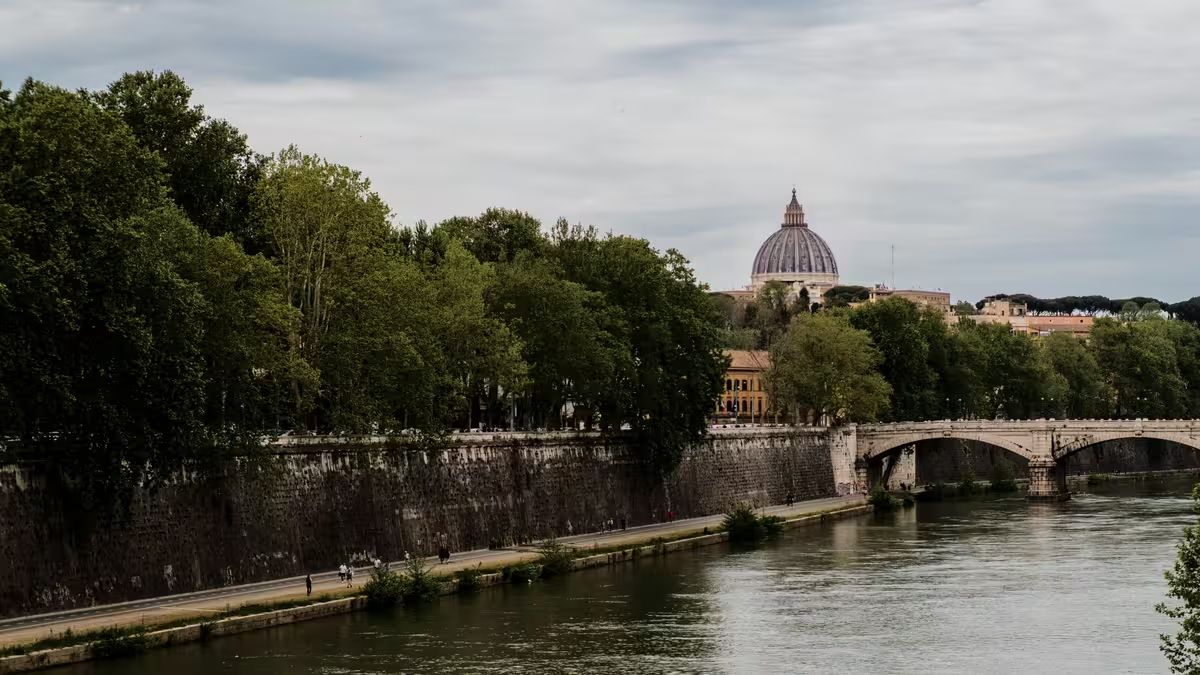
The smallest state in the world, forty-four hectares within Rome defined by the Lateran Treaty of 1929, Vatican City is the seat of the Pope and the holiest city of Catholic Christianity. Its centre is St Peter’s Basilica, raised over the tomb of the apostle Peter, whom Catholics count the first bishop of Rome. Constantine founded the first basilica there in the fourth century; beneath the present church, rebuilt from 1506 by Bramante, Michelangelo, Maderno and Bernini, lie remains of that basilica and the first-century necropolis where Peter’s tomb is located. The whole state has been a World Heritage site since 1984.21 See The five great sees of the early church.
Ahvaz and the Karun
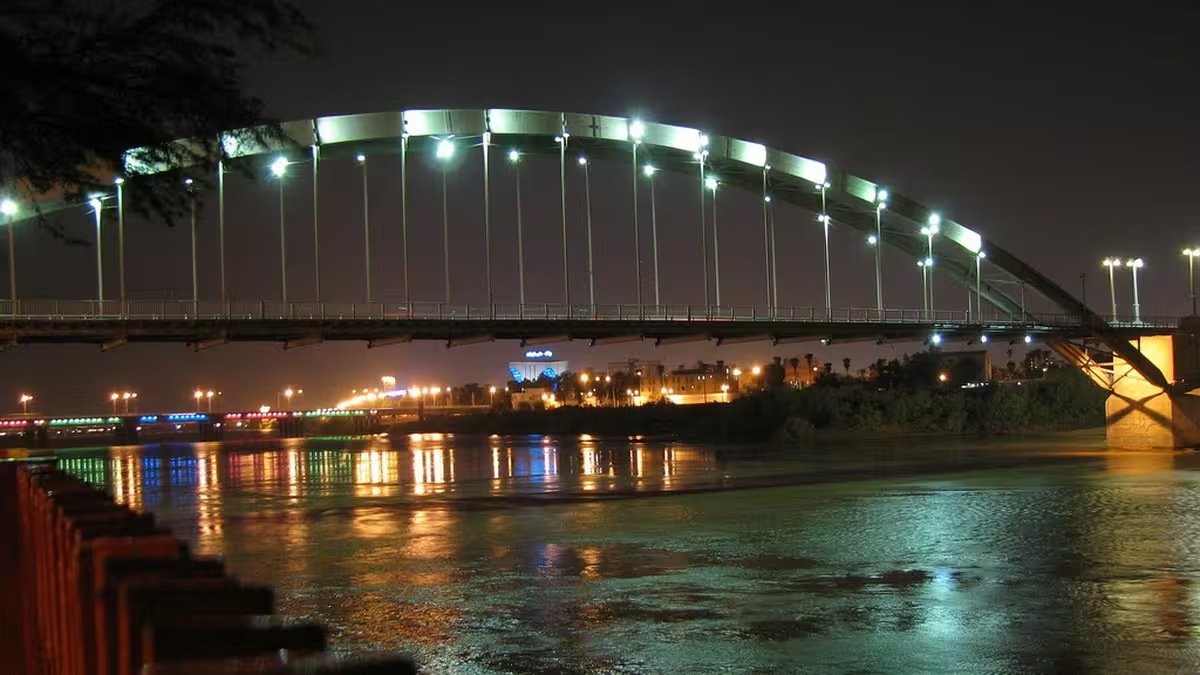
Mandaeism has no single holy city: its sacred places are its rivers, where every baptism must be performed in running water. Its communities have lived for centuries in the marshes and river towns of southern Iraq, and across the border in the Iranian province of Khuzestan, where E. S. Drower recorded settlements at Muhammerah and at Ahvaz on the banks of the Karun.22 Ahvaz is still the centre of the Mandaean community in Iran: its mandi, the community house, stands in the Mandaean quarter of the city, and its Sunday baptisms take place in the open along the Karun.23 See Mandaeism and Maṣbūtā: baptism in running water.
Notes
- Qur’an 17:1; 2:144. ↩
- Genesis 23:1-20; 49:29-32. ↩
- UNESCO World Heritage Centre, “Hebron/Al-Khalil Old Town,” World Heritage List no. 1565. ↩
- 1 Samuel 16:1-13; Matthew 2:1; Luke 2:4-7. ↩
- UNESCO World Heritage Centre, “Birthplace of Jesus: Church of the Nativity and the Pilgrimage Route, Bethlehem,” World Heritage List no. 1433. ↩
- Qur’an 19:22-26. ↩
- Luke 1:26-38; 2:39-40. ↩
- Qur’an 3:45-47; 19:16-21. ↩
- “Christian Holy Sites: The Basilica of the Annunciation,” Jewish Virtual Library, after the Israeli Ministry of Foreign Affairs. ↩
- Exodus 19:16-20:17. ↩
- Qur’an 95:2; 20:11-14. ↩
- UNESCO World Heritage Centre, “Saint Catherine Area,” World Heritage List no. 954. ↩
- Joshua 3:14-17; Matthew 3:13-17. ↩
- UNESCO World Heritage Centre, “Baptism Site “Bethany Beyond the Jordan” (Al-Maghtas),” World Heritage List no. 1446. ↩
- Eric Segelberg, Maṣbūtā: Studies in the Ritual of the Mandaean Baptism (Uppsala: Almqvist & Wiksells, 1958), p. 38 and n. 2. ↩
- Qur’an 3:96; 2:127. ↩
- Qur’an 2:144. ↩
- Qur’an 33:13. ↩
- Qur’an 9:40. ↩
- “Medina,” Encyclopaedia Britannica. ↩
- UNESCO World Heritage Centre, “Vatican City,” World Heritage List no. 286. ↩
- E. S. Drower, The Mandaeans of Iraq and Iran (Oxford: Clarendon Press, 1937), pp. 1-2. ↩
- “Mandaeans (4): Community in Iran,” Encyclopaedia Iranica. ↩