The sacred texts of the four traditions are the subject of this section. Each Abrahamic tradition is anchored in scripture, and each surrounds its scripture with a tradition of interpretation. What follows are the principal texts of each, and how they took shape.
In this article
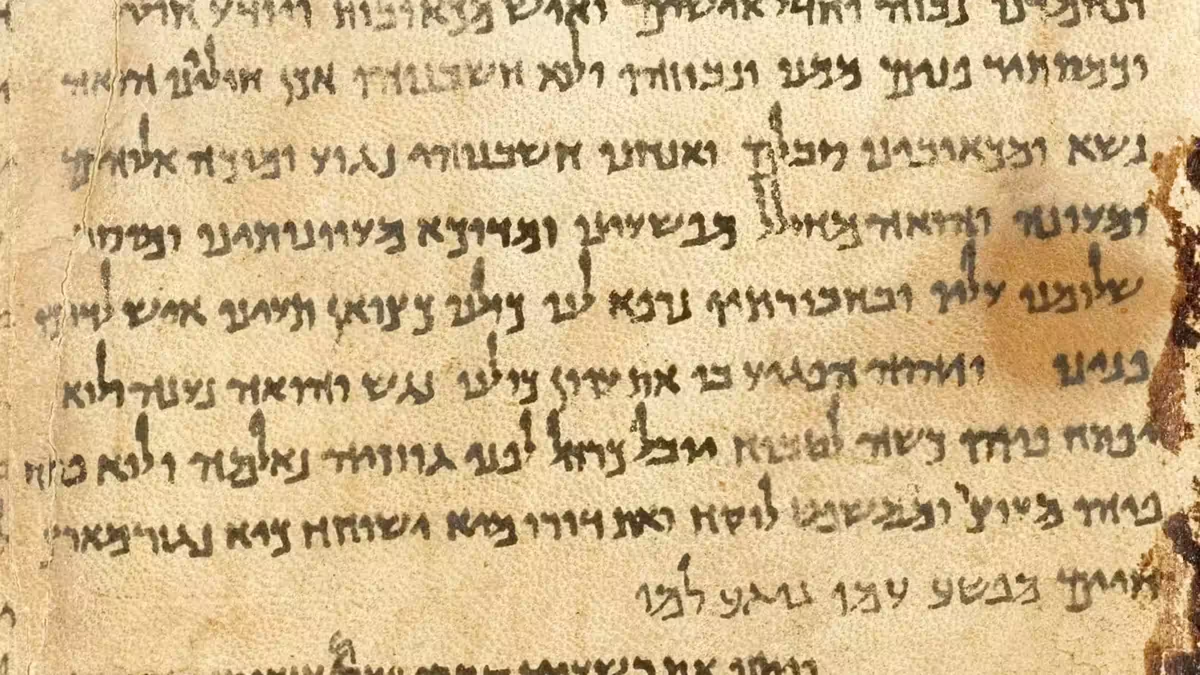
Sacred texts: the Hebrew Bible
The Tanakh takes its name from its three divisions: Torah, Nevi’im and Ketuvim. Jewish tradition counts twenty-four books. The Torah, the five books from Genesis to Deuteronomy, holds the highest place and is read in full in the synagogue over the course of each year. The oldest surviving Hebrew manuscripts of biblical books are among the Dead Sea Scrolls, found near Qumran from 1947 onwards and dating from roughly the third century BCE to the first century CE.
Rabbinic literature
The Mishnah, edited around 200 CE, organises Jewish law by subject. The Talmud joins the Mishnah to the Gemara, a wide-ranging commentary; its Jerusalem and Babylonian versions were completed between the fifth and seventh centuries. Midrash collects rabbinic interpretation of scripture.
Each of the three scriptures has a page of its own, listing what it contains: the Tanakh, the Christian Bible and the Qur’an.
Aramaic in the scriptures
Aramaic, a Semitic language closely related to Hebrew, served as a common language across much of the Near East from the Persian period onwards. Papyri from the Jewish community at Elephantine in Egypt, written in the Imperial Aramaic script, survive from the fifth century BCE. Parts of the books of Daniel and Ezra are written in Aramaic, in the same square script as the Hebrew around them. The Targums (תרגום, “translation”), Aramaic renderings of the Hebrew scriptures, were read in synagogues, and the Gemara of the Babylonian Talmud is written largely in Jewish Babylonian Aramaic.
Most historians hold that Jesus taught in Aramaic, and the Gospels preserve a few of his Aramaic words, such as abba (אבא, father). Syriac, a dialect of Aramaic with its own alphabet, carries the Peshitta (ܦܫܝܛܬܐ, “the simple version”), the standard Bible of the Syriac churches, and a large body of Christian literature.
The Mandaean scriptures
The Mandaeans keep their scriptures in Mandaic, an eastern dialect of Aramaic with its own script. The largest is the Ginza Rabba (the Great Treasure), bound in two halves: the Right Ginza on theology, creation and history, and the Left Ginza on the ascent of the soul after death. Beside it stand the Qolasta (the Collection), the prayer book used in baptism and the rites for the dead, and the Drasha d-Yahya (the Book of John), which gathers the teachings of John the Baptist. The community keeps its own history in a scroll, the Haran Gawaita.
Copying the scriptures is reserved to the priests, and the more esoteric scrolls are handed on at ordination and withheld from laypeople. The colophons, in which each copyist names the scribes before him, allow the chain of transmission to be traced back many centuries. The Mandaeism page lists the books in more detail.
The Christian Bible
The Christian Old Testament contains the books of the Hebrew Bible, arranged differently. The Catholic and Orthodox churches also accept further books preserved in the Greek translation known as the Septuagint, called deuterocanonical books. The New Testament has twenty-seven books: the four Gospels, the Acts of the Apostles, twenty-one letters and the book of Revelation. Protestant Bibles contain sixty-six books, Catholic Bibles seventy-three, and Orthodox Bibles a few more.
The Qur’an and ḥadīth
The Qur’an has 114 sūrahs (سورة, chapters), arranged broadly from longest to shortest. Muslim tradition holds that it was revealed over some twenty-three years, memorised and written down in the Prophet’s lifetime, and gathered into a standard written text under the third caliph, ʿUthmān, around 650 CE.
Muslim theology locates the miracle of the revelation in what was said and not in any power granted to the man who received it, a point that shapes both how the text is read and the weight given to its wording.1 Alongside the written text, the Qur’an has been carried by memory: a Muslim who has memorised all of it is called a ḥāfiẓ (حافظ, “one who preserves”), and such reciters are found in Muslim communities worldwide. The ḥadīth literature records the words and deeds of the Prophet; Sunni Muslims give special weight to the collections compiled by al-Bukhārī and Muslim ibn al-Ḥajjāj.
Reading scripture
All four traditions read scripture through commentary. Jewish readers turn to the Talmud and the medieval commentators; Christian readers to the church fathers and later theologians; Muslim readers to tafsīr (تفسير, exegesis); Mandaean priests to the ritual commentaries their order transmits. Modern historical scholarship adds its own questions about authorship, dating and context. See Understanding the Bible and the Qur’an in Historical Context.
Notes
- Ismaʿil Raji al Faruqi, in Wing-tsit Chan, Ismaʿil Raji al Faruqi, Joseph M. Kitagawa and P. T. Raju, comps., The Great Asian Religions: An Anthology (New York: Macmillan, 1969), p. 332. ↩
See also: The Qur’an (Quran.com).