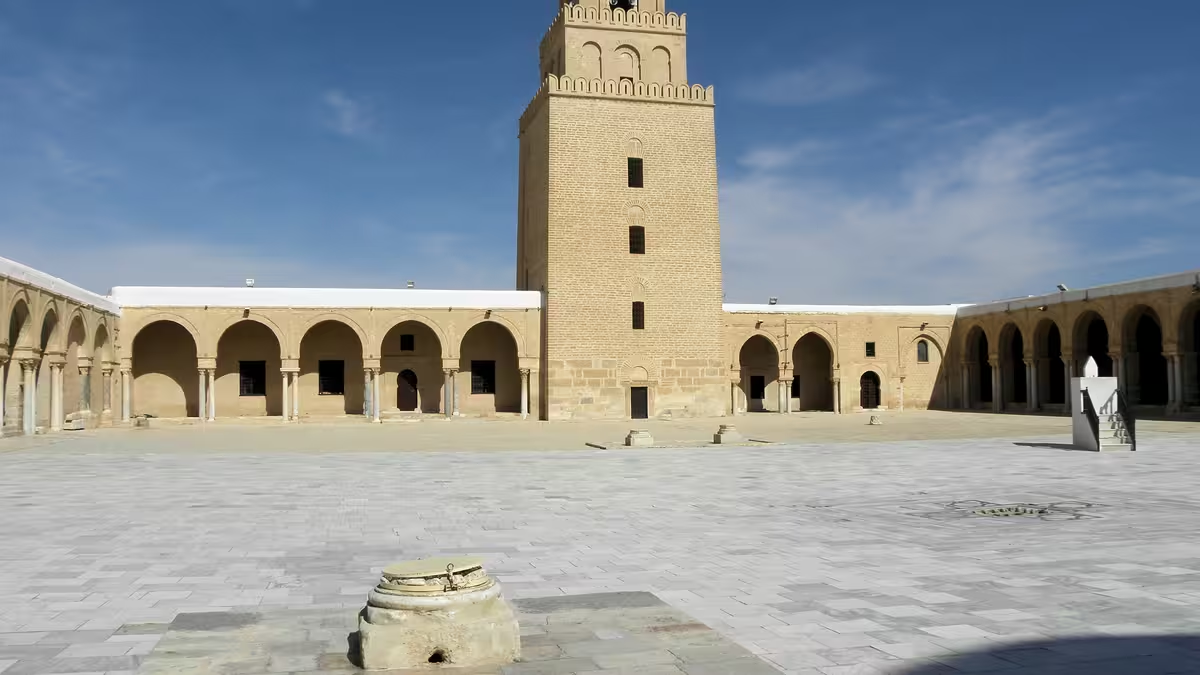
Kairouan, in central Tunisia, is the oldest Muslim city of the Maghreb and was for centuries its principal holy city. Its Great Mosque, founded with the city in 670, became the model for the mosques of North Africa.
In this article
The founding of the city
The Arab commander ʿUqbah ibn Nāfiʿ founded Kairouan in 670 as a base for the Muslim advance into North Africa, choosing a site far enough inland to be safe from attack by sea. Under the Aghlabid dynasty in the ninth century the city flourished, and even after the political capital moved to Tunis in the twelfth century, Kairouan remained the Maghreb’s principal holy city.1
The Great Mosque of Kairouan
The Great Mosque of Kairouan, also called the Mosque of ʿUqbah, was rebuilt by the Aghlabid emir Ziyadat Allah I in 836 and enlarged in the 860s.2 Its prayer hall rests on columns of marble and porphyry taken from Roman and Byzantine buildings, and its massive square minaret, among the oldest standing in the Islamic world, set the pattern for the minarets of the Maghreb. Nearby stands the ninth-century Mosque of the Three Gates.
A city of scholars
The city was also a centre of learning. The jurist Saḥnūn, who died in 854, taught there and compiled the work that made the Mālikī school the law of North Africa and al-Andalus. Physicians, grammarians and Jewish scholars worked in the city too, in the age when Jews corresponded from Kairouan with the academies of Baghdad.
The Qur’an describes those who build and keep God’s mosques:
إِنَّمَا يَعْمُرُ مَسَـٰجِدَ ٱللَّهِ مَنْ ءَامَنَ بِٱللَّهِ وَٱلْيَوْمِ ٱلْـَٔاخِرِ وَأَقَامَ ٱلصَّلَوٰةَ وَءَاتَى ٱلزَّكَوٰةَ وَلَمْ يَخْشَ إِلَّا ٱللَّهَ ۖ فَعَسَىٰٓ أُو۟لَـٰٓئِكَ أَن يَكُونُوا۟ مِنَ ٱلْمُهْتَدِينَ ١٨
The mosques of Allāh are only to be maintained by those who believe in Allāh and the Last Day and establish prayer and give zakāh and do not fear except Allāh, for it is expected that those will be of the [rightly] guided.
Qur’an 9:183
The verse is a fitting description of the city. Its founders and their successors maintained its mosques for more than thirteen centuries, establishing prayer and teaching the law, and the city earned its name as the holy city of the Maghreb through that faithfulness.
Further reading: The Kaaba, Masjid al-Aqsa, Religious law in the Abrahamic traditions.