Read in historical context, the Bible and the Qur’an are best understood in the history that produced them. Believers read scripture as revelation. Historians ask a further set of questions: when were these texts written down, by whom, in what circumstances, and how were they transmitted? The two ways of reading can inform each other. Reading either scripture in this way asks how it was received by its first hearers, and how the questions of their time shaped the words that were preserved.
In this article
The Hebrew Bible
The books of the Hebrew Bible were composed and edited over many centuries. Modern scholarship has proposed that the Torah combines earlier sources, a view developed in the nineteenth century and much revised since. The Dead Sea Scrolls, discovered near Qumran from 1947 onwards, include manuscripts of nearly every book of the Hebrew Bible and date from roughly the third century BCE to the first century CE. They show both a remarkable continuity with the later standard text and a degree of variety in the period before it was fixed.
The New Testament
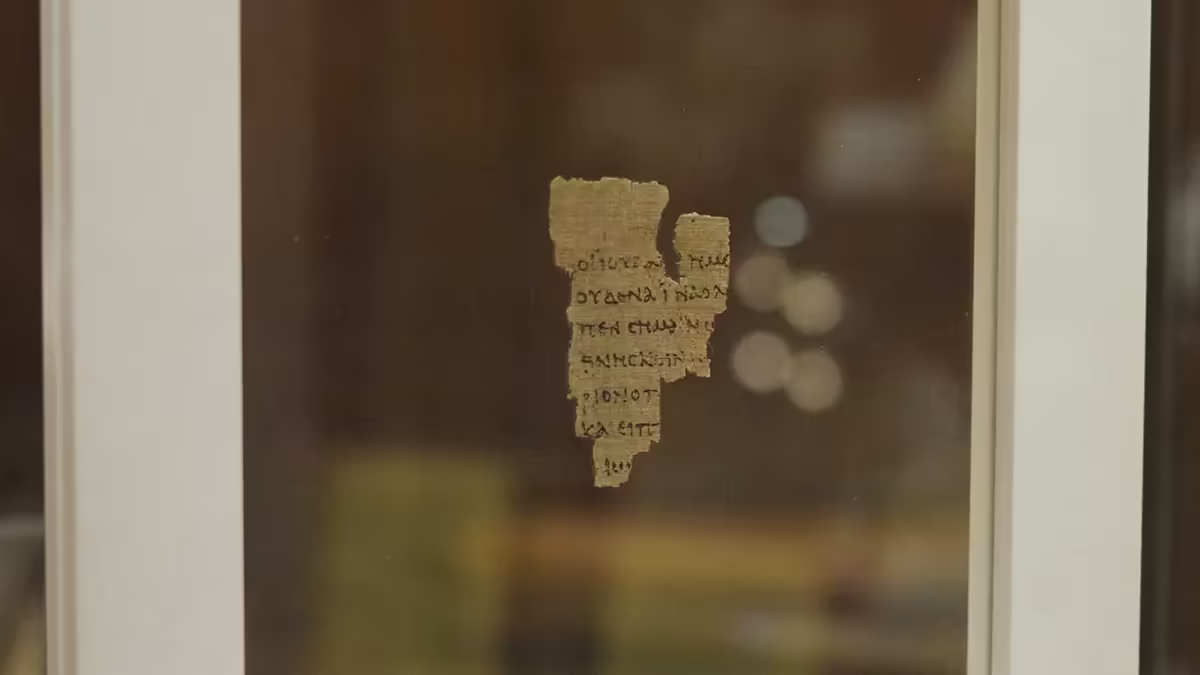
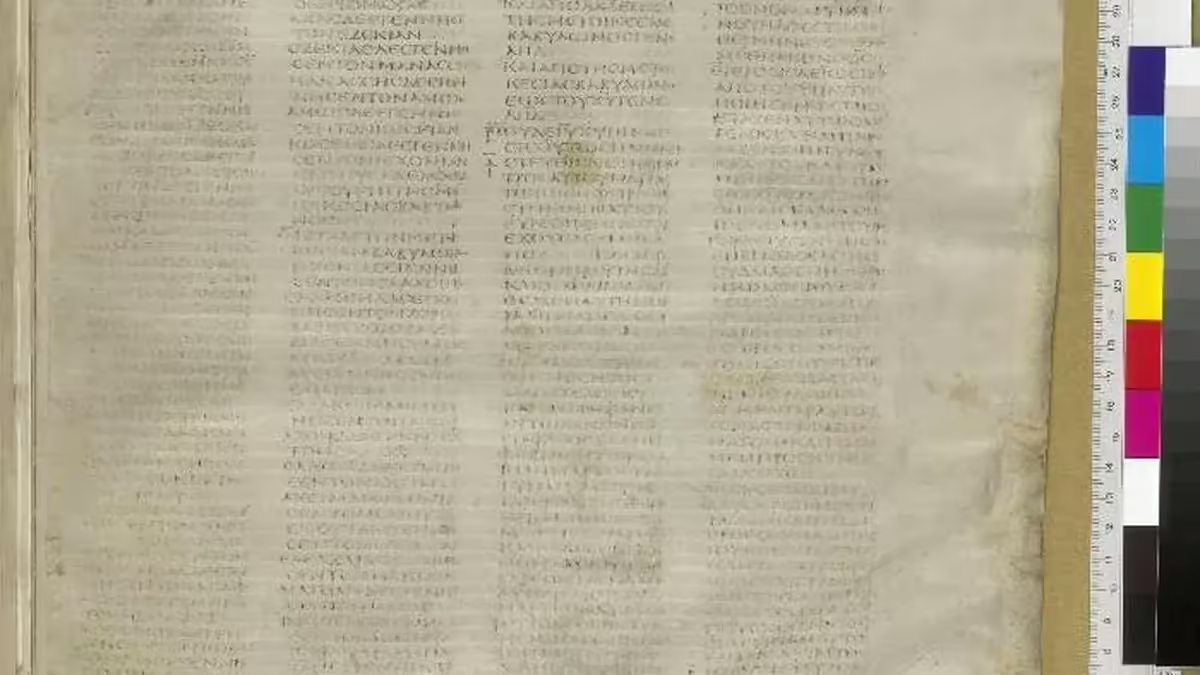
The New Testament books were written in Greek in the first century and the early second century CE. Most scholars date Paul’s letters to the 50s CE, making them the earliest Christian writings, and the Gospels to the following decades. Thousands of Greek manuscripts survive, the oldest being small papyrus fragments from the second century. Textual critics compare them to reconstruct the earliest recoverable text.
The Qur’an
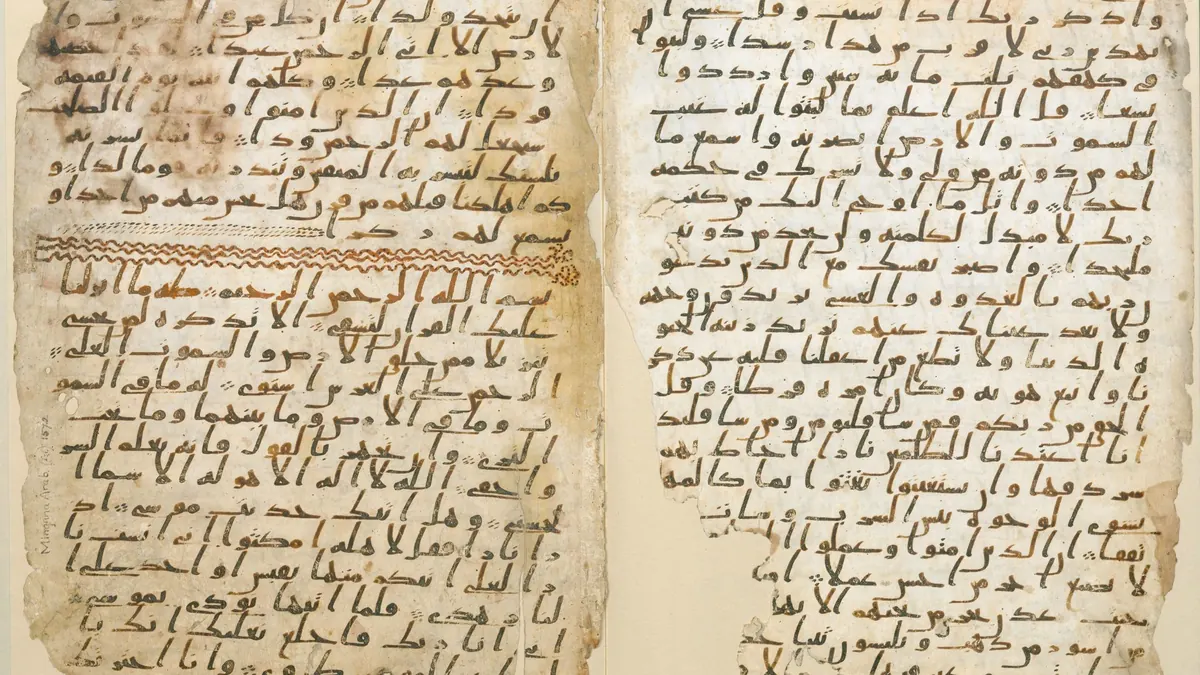
Muslim tradition holds that the Qur’an was revealed to Muhammad between about 610 and 632 CE, and that a standard written text was established under the caliph ʿUthmān around 650. Early manuscripts, some written on parchment that radiocarbon testing places in the seventh century, have allowed scholars to study the text’s early history.
Two leaves held by the University of Birmingham, carrying parts of sūrahs 18 to 20 in the early Hijazi script, were tested at Oxford in 2014: the parchment dates, with 95.4 per cent probability, to between 568 and 645 CE, a range that overlaps the lifetime of the Prophet.1 The interval between the revelation and its earliest surviving copies is therefore a matter of decades. Muslim scholarship has its own long tradition of historical inquiry, including the study of asbāb al-nuzūl (أسباب النزول, occasions of revelation), the circumstances in which particular passages were revealed.
Reading in historical context
Historical context can illuminate a passage: the customs it assumes, the audience it addresses, the questions it answers. Traditions differ in how much weight they give such readings. For many believers, historical study deepens understanding of texts they hold to be revealed; for others, it raises questions that call for careful theological response.
Further reading: The king and the Pharaoh, John the Baptist in four traditions and What archaeology tells us about the ancient Near East, The preservation and transmission of scripture and Mary across the traditions, Paul and Peter: two missions in the early church, The Bible (Encyclopaedia Britannica).
Notes on the Bible and the Qur’an
- University of Birmingham, “Birmingham Qur’an manuscript dated among the oldest in the world”, press release, 22 July 2015; Cadbury Research Library, Islamic Arabic 1572a. ↩