Mary is the one figure honoured by name in both the New Testament and the Qur’an, and the only woman the Qur’an names.1 Christians venerate her as the mother of God incarnate; Muslims honour her as the mother of a prophet and, by the Qur’an’s own words, exalted above the women of the worlds.
In this article

In the New Testament
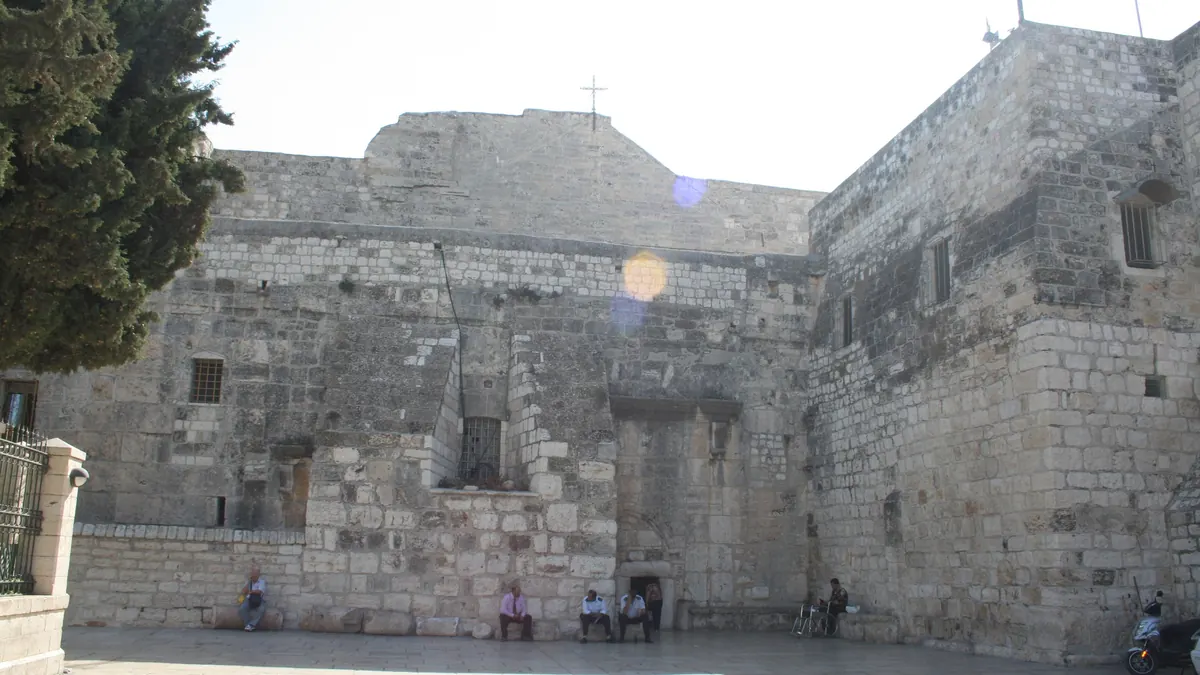
Luke’s Gospel tells of the angel Gabriel announcing to Mary, a virgin betrothed to Joseph, that she will conceive by the Holy Spirit and bear a son to be called Jesus.2 She travels to Bethlehem for the birth, and the Gospels place her at the foot of the cross and among the earliest witnesses named after the resurrection.3 Christian doctrine over the centuries has added to her honour: the Council of Ephesus in 431 CE declared her Theotokos, God-bearer, and Catholic and Orthodox tradition holds her own conception and bodily assumption to have been free of the ordinary course of things.4
In the Qur’an
The nineteenth chapter of the Qur’an bears her name, Sūrat Maryam, the only chapter named for a woman.5 It tells of her withdrawal to a private place, the angel’s announcement of a pure son, and her giving birth alone beneath a palm tree, comforted by a stream and ripening dates.6 A separate verse has angels tell her that God has chosen her and purified her above the women of the worlds.7 The Qur’an affirms the virgin birth as an act of divine power, comparing it to the creation of Adam, while denying that it makes Jesus the son of God.8
A shared manuscript witness
Two of the oldest known Qur’an manuscripts both preserve part of her chapter: the Birmingham leaves carry its closing verses, and the Sana’a palimpsest’s lower text includes an early version of its opening.9 See Understanding the Bible and the Qur’an in historical context.
Common ground and disagreement
Both scriptures agree that Mary conceived as a virgin, by divine action, without a human father, and both hold her in the highest honour given to a woman in their respective traditions. They part over what that birth implies: for the New Testament it is a sign of the incarnation of God the Son, for the Qur’an a miracle comparable to the creation of Adam and no more, safeguarding the strict oneness of God. See Mary among the figures and Jesus across the traditions.
Further reading: Jesus across the traditions, John the Baptist in four traditions and Understanding the Bible and the Qur’an in historical context.

Notes on Mary
- Encyclopaedic surveys of the Qur’an’s named figures count Maryam as the only woman named in the text; she is mentioned by name thirty-four times. ↩
- Luke 1:26-38. ↩
- John 19:25; Acts 1:14. ↩
- Council of Ephesus (431 CE); Catholic dogmas of the Immaculate Conception (1854) and the Assumption (1950). ↩
- Qur’an, sūrah 19, Maryam. ↩
- Qur’an 19:16-26. ↩
- Qur’an 3:42. ↩
- Qur’an 3:47, 59. ↩
- University of Birmingham, Cadbury Research Library, Islamic Arabic 1572a (Q19:91-98); the Sana’a palimpsest’s lower text (Q19:2-28). ↩