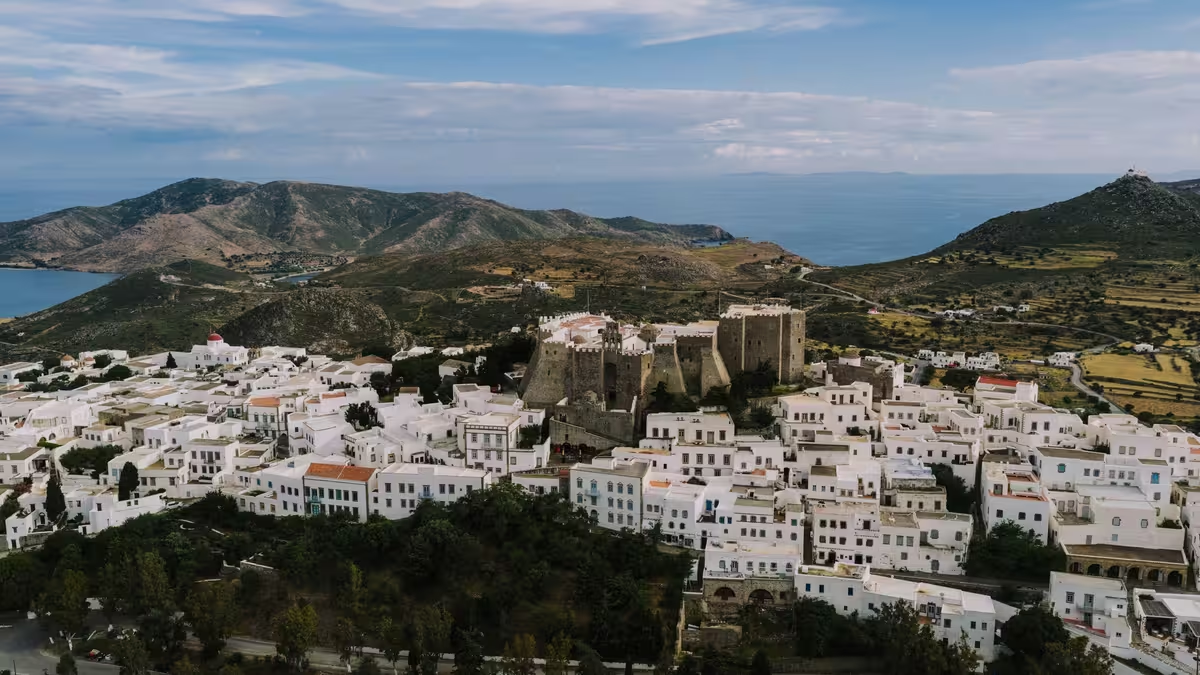
Patmos and Mount Athos are the two great holy places of the Greek Orthodox world. On Patmos, a small island in the Aegean, Christian tradition places the visions of the Book of Revelation. On Mount Athos, a mountainous peninsula in northern Greece, monks have lived in prayer for more than a thousand years.
In this article
Patmos and the Apocalypse
The author of Revelation says he was on the island called Patmos ‘for the word of God’ when he received his visions.1 Tradition identifies him with John the apostle and shows pilgrims the cave where he is said to have seen them. In 1088 the monk Christodoulos founded the fortified Monastery of St John the Theologian above it, and the town of Chora grew around the monastery. UNESCO lists the monastery, the cave and the old town together.2
Mount Athos
Mount Athos has been an Orthodox spiritual centre since the tenth century and has governed itself since Byzantine times. Twenty monasteries divide the peninsula among them, seventeen Greek and one each Russian, Serbian and Bulgarian, with smaller sketes and hermitages. By ancient rule, women may not enter. UNESCO calls the monasteries a conservatory of masterpieces, from wall paintings to manuscripts.34
Patmos and Mount Athos in the light of the Qur’an
The Qur’an speaks with respect of the devout among the People of the Book who stand in prayer by night:
۞ لَيْسُوا۟ سَوَآءً ۗ مِّنْ أَهْلِ ٱلْكِتَـٰبِ أُمَّةٌ قَآئِمَةٌ يَتْلُونَ ءَايَـٰتِ ٱللَّهِ ءَانَآءَ ٱلَّيْلِ وَهُمْ يَسْجُدُونَ ١١٣
They are not [all] the same; among the People of the Scripture is a community standing [in obedience], reciting the verses of Allāh during periods of the night and prostrating [in prayer].
يُؤْمِنُونَ بِٱللَّهِ وَٱلْيَوْمِ ٱلْـَٔاخِرِ وَيَأْمُرُونَ بِٱلْمَعْرُوفِ وَيَنْهَوْنَ عَنِ ٱلْمُنكَرِ وَيُسَـٰرِعُونَ فِى ٱلْخَيْرَٰتِ وَأُو۟لَـٰٓئِكَ مِنَ ٱلصَّـٰلِحِينَ ١١٤
They believe in Allāh and the Last Day, and they enjoin what is right and forbid what is wrong and hasten to good deeds. And those are among the righteous.
Qur’an 3:113-1145
The verses describe what Athos and Patmos were built for: a community standing in prayer through the night, reciting and prostrating. The Qur’an does not call all the People of the Book alike, and it counts among the righteous those of them who believe in God and the Last Day and hasten to good deeds. Muslims who learn of the night offices of Athos can recognise in them the devotion the Qur’an praises.
Further reading: The five great sees of the church, Hagia Sophia, Christianity.
Notes
- Revelation 1:9. ↩
- The Historic Centre (Chorá) with the Monastery of Saint-John the Theologian and the Cave of the Apocalypse on the Island of Pátmos, UNESCO World Heritage List, inscribed 1999. ↩
- Mount Athos, UNESCO World Heritage List, inscribed 1988. ↩
- Giulia Kakavas, “The Avaton Debate: Human Rights and the Monastic Community of Mount Athos,” University of Modena and Reggio Emilia. ↩
- Qur’an 3:113-114, trans. Saheeh International; Arabic text from Quran.com. ↩