
Each year the Hajj carries its pilgrims out of Makkah to three stations in the valleys to the east: Minā, ʿArafāt and Muzdalifah. In 2026 the Saudi General Authority for Statistics counted 1,707,301 pilgrims, of whom 1,546,655 came from abroad: 1,485,729 by air, 54,429 by road and 6,497 by sea.1 The Hajj is the fifth pillar of Islam, a duty on every adult Muslim able to make it once in a lifetime, and its rites fall in the first half of Dhū al-Ḥijjah, the last month of the Islamic year.2
Abraham’s call
The Qur’an traces the pilgrimage to Abraham. God showed him the site of the House, forbade him to set any partner beside Him, and commanded him to call the people to it:
وَإِذْ بَوَّأْنَا لِإِبْرَٰهِيمَ مَكَانَ ٱلْبَيْتِ أَن لَّا تُشْرِكْ بِى شَيْـًٔا وَطَهِّرْ بَيْتِىَ لِلطَّآئِفِينَ وَٱلْقَآئِمِينَ وَٱلرُّكَّعِ ٱلسُّجُودِ ٢٦
And [mention, O Muḥammad], when We designated for Abraham the site of the House, [saying], “Do not associate anything with Me and purify My House for those who perform ṭawāf and those who stand [in prayer] and those who bow and prostrate.
وَأَذِّن فِى ٱلنَّاسِ بِٱلْحَجِّ يَأْتُوكَ رِجَالًا وَعَلَىٰ كُلِّ ضَامِرٍ يَأْتِينَ مِن كُلِّ فَجٍّ عَمِيقٍ ٢٧
And proclaim to the people the ḥajj [pilgrimage]; they will come to you on foot and on every lean camel; they will come from every distant pass.”
Qur’an 22:26-273
Every station of the Hajj answers that command. The figures of 2026 read like a commentary on its last line: the pilgrims came by air and by road and by sea, from every distant pass of the modern world, to the valley where Abraham was told to call them.
Makkah: the House and the two hills
The pilgrim enters Makkah in iḥrām (إِحْرَام, the consecrated state and its two plain white garments), walks seven times around the Kaaba in the ṭawāf (طَوَاف, circling), prays toward the Station of Abraham, and walks seven times between the hills of Ṣafā and Marwah.2 That walk, the saʿy (سَعْي, striving), keeps the memory of Hagar. Left with the infant Ishmael in a valley without water, she climbed Ṣafā to look for help, crossed the valley to Marwah, and did so seven times; the Prophet said that this was the origin of the pilgrims’ walking between the two hills.4 The Qur’an names Ṣafā and Marwah among the symbols of God.5
Minā: the eighth day
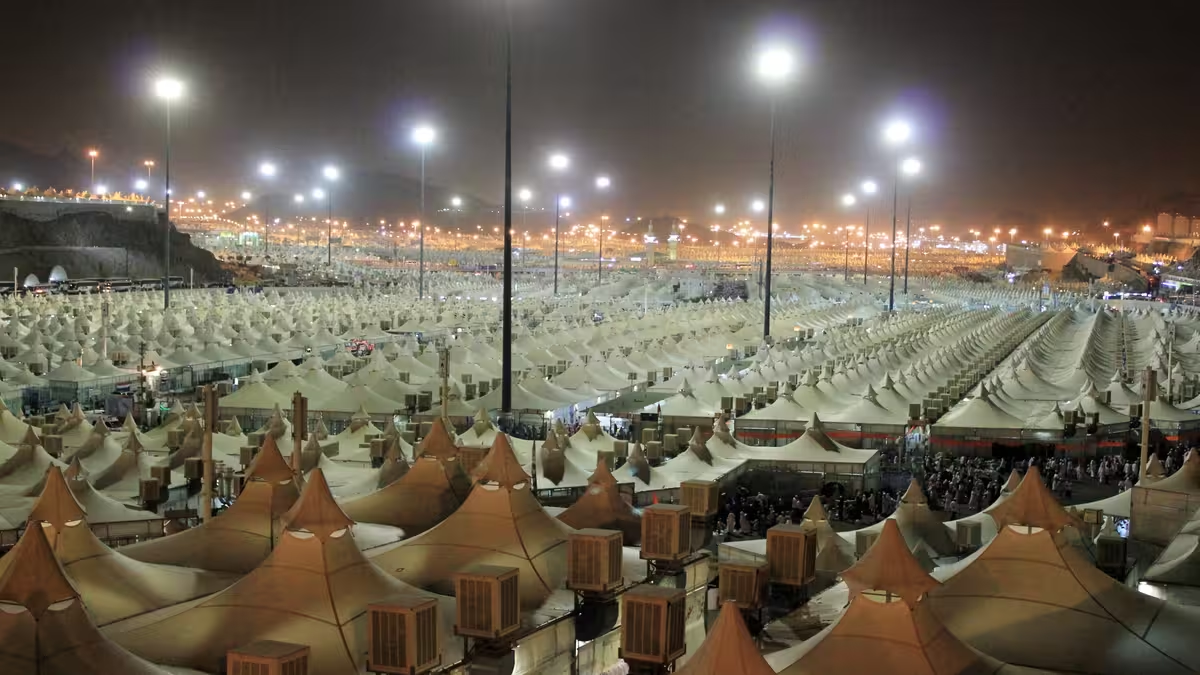
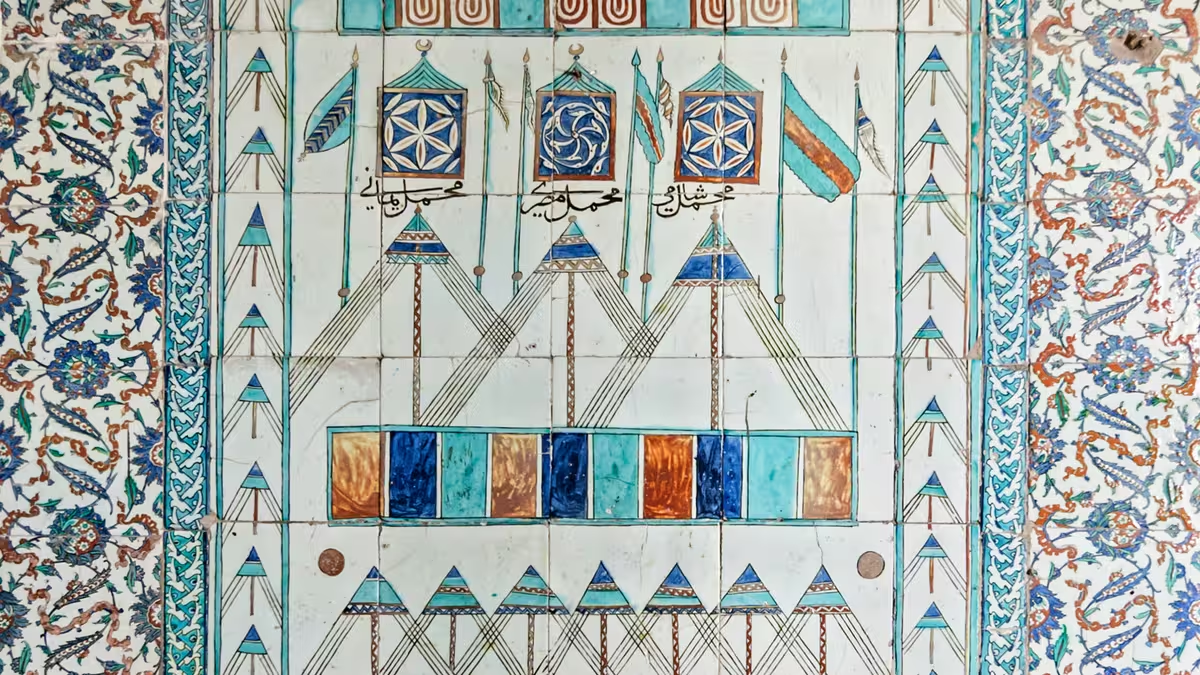
On the eighth of Dhū al-Ḥijjah, the Day of Tarwiyah, the pilgrims leave Makkah for Minā and spend the day and night there.6 Minā is a valley of tents, laid out in rows that fill it from side to side, and it is where the pilgrims will return for the last days of the Hajj.
ʿArafāt: the ninth day
On the ninth the pilgrims move to the plain of ʿArafāt and the low hill within it, Jabal al-Raḥmah, the Mount of Mercy.2 The standing there, the wuqūf (وُقُوف, standing), from the day into the sunset, is the central pillar of the Hajj.6 When a group from Najd asked the Prophet at ʿArafāt how the Hajj was done, he had a man proclaim the answer aloud: the Hajj is on the day of ʿArafah.7 A pilgrim who misses it has missed the Hajj, and signs at the edge of the plain mark where ʿArafāt ends.
Muzdalifah: the night
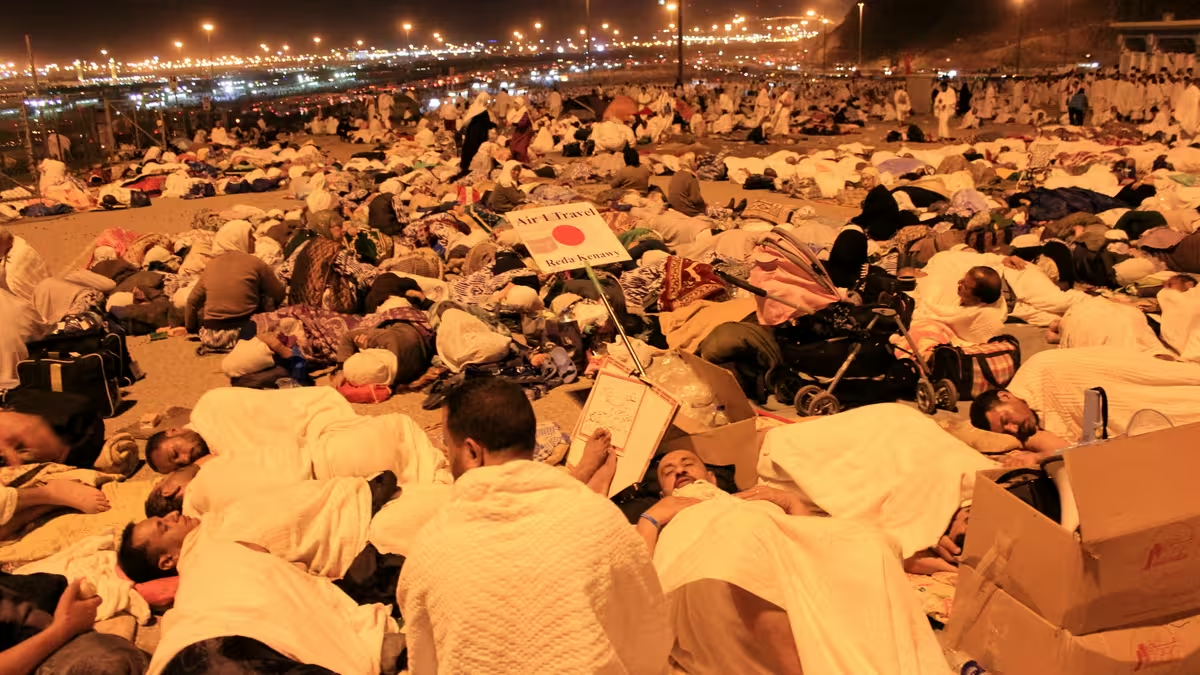
At sunset the pilgrims leave ʿArafāt for Muzdalifah, the open ground between ʿArafāt and Minā. There they pray the sunset and night prayers together and sleep in the open until dawn.6 The Qur’an names this station: when you depart from ʿArafāt, remember God at al-Mashʿar al-Ḥarām (ٱلْمَشْعَر ٱلْحَرَام, the Sacred Monument).8 At Muzdalifah many gather the small pebbles they will need in Minā.
Minā again: the days of sacrifice
The tenth is the Day of Sacrifice. The pilgrims throw seven pebbles at the largest of three pillars, Jamrat al-ʿAqabah, in the ramy (رَمْي, casting), a rite that stands for the rejection of the Devil; they sacrifice an animal in commemoration of Abraham’s sacrifice; men shave their heads and women cut a lock of hair; and they return to Makkah for the circling of the House.2 The Qur’an closes the story of that sacrifice with God ransoming Abraham’s son with a great sacrifice.9 On the three days that follow, the Days of Tashrīq, the pilgrims stay in Minā and stone all three pillars each day.6 A last circling of the Kaaba, the farewell ṭawāf, ends the Hajj.2
The promise kept
Read in order, the stations retrace a single family’s trial and a single command. Hagar’s search for water becomes the walk between the two hills, and Abraham’s readiness to give up his son becomes the sacrifice at Minā, where the casting of the stones repeats his rejection of the Devil. Above them stands the call of Qur’an 22:27, spoken to Abraham at the empty site of the House. The pilgrims who stood on ʿArafāt in 2026 had come on foot and by road, by sea and by air, from every distant pass, as the verse promised they would. See The Abrahamic family tree for the family behind the rites, and Who was Abraham?
Further reading: Who was Abraham?, The path of Abraham in the Qur’an, The Abrahamic family tree and what the traditions share, Ḥirāʾ and Qubāʾ.
Notes
- General Authority for Statistics (GASTAT), “Total number of pilgrims for Hajj 2026 reaches (1,707,301),” news release, 2026. ↩
- “Hajj,” Encyclopaedia Britannica. ↩
- Qur’an 22:26-27, trans. Saheeh International; Arabic text from Quran.com. ↩
- Ṣaḥīḥ al-Bukhārī 3364, narrated by Ibn ʿAbbās. ↩
- Qur’an 2:158. ↩
- “Hajj,” Saudipedia. ↩
- Sunan Abī Dāwūd 1949, narrated by ʿAbd al-Raḥmān ibn Yaʿmar al-Dīlī, graded ṣaḥīḥ by al-Albānī; cf. Jāmiʿ al-Tirmidhī 2975. ↩
- Qur’an 2:198, trans. Saheeh International. ↩
- Qur’an 37:107. ↩