
Two places mark the beginnings of Islam. On a mountain above Makkah is the cave of Ḥirāʾ, where the revelation of the Qur’an began; in Qubāʾ, on the southern edge of Madinah, stands the mosque that the Prophet founded when he reached the city at the Hijra in 622. The first is where the message was received, and the second is where the community first gathered to pray.
The cave on the Mountain of Light
The cave lies near the summit of Jabal al-Nūr (جَبَل ٱلنُّور, the Mountain of Light), a steep peak on the edge of Makkah. ʿĀʾishah described how the revelation came. Before it, the Prophet loved seclusion; he would go to the cave of Ḥirāʾ with provisions and worship there for many days before returning to Khadījah for more. There the angel came to him and told him to read. He answered that he could not read; three times the angel pressed him and repeated the command, and then recited the first verses of the chapter called the Clot.1
ٱقْرَأْ بِٱسْمِ رَبِّكَ ٱلَّذِى خَلَقَ ١
Recite in the name of your Lord who created,
خَلَقَ ٱلْإِنسَـٰنَ مِنْ عَلَقٍ ٢
Created man from a clinging substance.
ٱقْرَأْ وَرَبُّكَ ٱلْأَكْرَمُ ٣
Recite, and your Lord is the most Generous,
ٱلَّذِى عَلَّمَ بِٱلْقَلَمِ ٤
Who taught by the pen,
عَلَّمَ ٱلْإِنسَـٰنَ مَا لَمْ يَعْلَمْ ٥
Taught man that which he knew not.
Qur’an 96:1-52
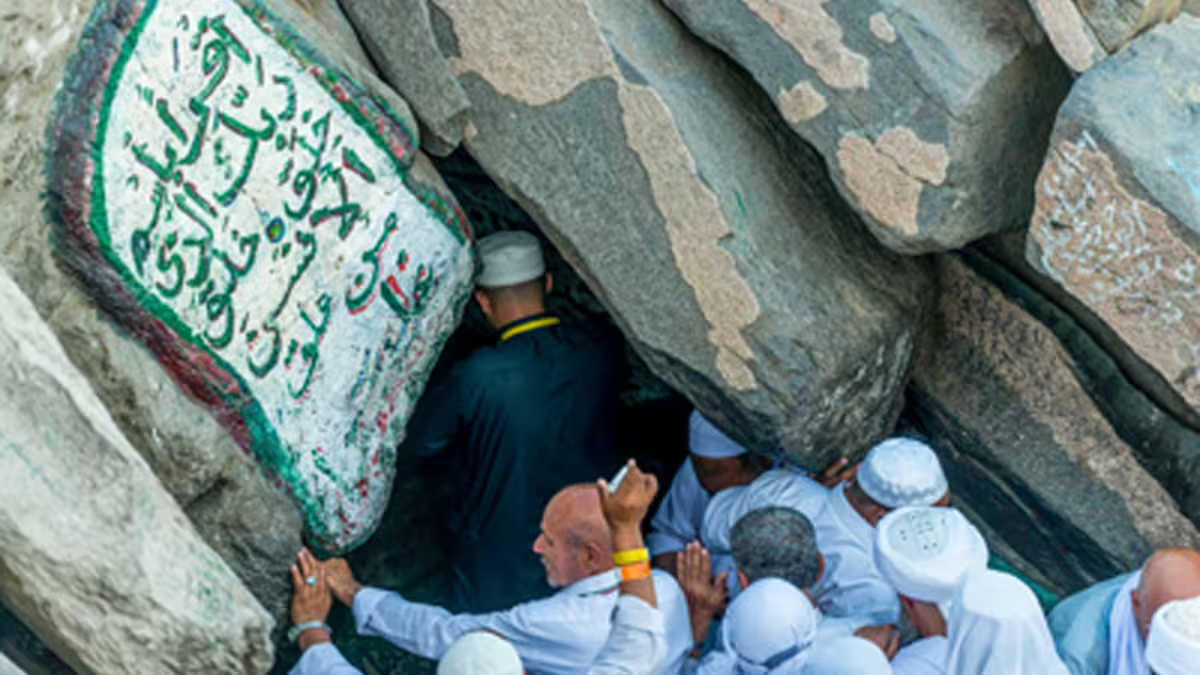
The first word of the revelation was a command to recite, and its first verses speak of the pen and of teaching man what he did not know. The religion that began in the cave began as a spoken and written word, given to a man who could not read. Pilgrims still climb the mountain to the cave, where the rocks around the entrance are painted with Qur’anic calligraphy.
The first mosque
Thirteen years later the Prophet left Makkah for Madinah. At Qubāʾ, then a village of palm groves outside the city, he laid the foundations of a mosque on the first day of his arrival; it is counted as the first mosque built in Islam.3 He kept returning to it for the rest of his life: he went to Qubāʾ every Saturday, sometimes walking and sometimes riding, and prayed there.4 He promised that whoever purifies himself at home and then prays in the mosque of Qubāʾ has the reward of an ʿumrah, the lesser pilgrimage.5
The Qur’an speaks of a mosque founded on piety from the first day:
لَا تَقُمْ فِيهِ أَبَدًا ۚ لَّمَسْجِدٌ أُسِّسَ عَلَى ٱلتَّقْوَىٰ مِنْ أَوَّلِ يَوْمٍ أَحَقُّ أَن تَقُومَ فِيهِ ۚ فِيهِ رِجَالٌ يُحِبُّونَ أَن يَتَطَهَّرُوا۟ ۚ وَٱللَّهُ يُحِبُّ ٱلْمُطَّهِّرِينَ ١٠٨
Do not stand [for prayer] within it, ever. A mosque founded on righteousness from the first day is more worthy for you to stand in. Within it are men who love to purify themselves; and Allah loves those who purify themselves.
Qur’an 9:1086
The exegetes commonly identify that mosque with Qubāʾ, whose founding the verse seems to describe. A hadith in Muslim’s collection records the Prophet applying the words to his own mosque in Madinah;7 scholars reconcile the two by holding that both mosques, founded by the Prophet himself, were built on piety from their first day.8
The mosque today
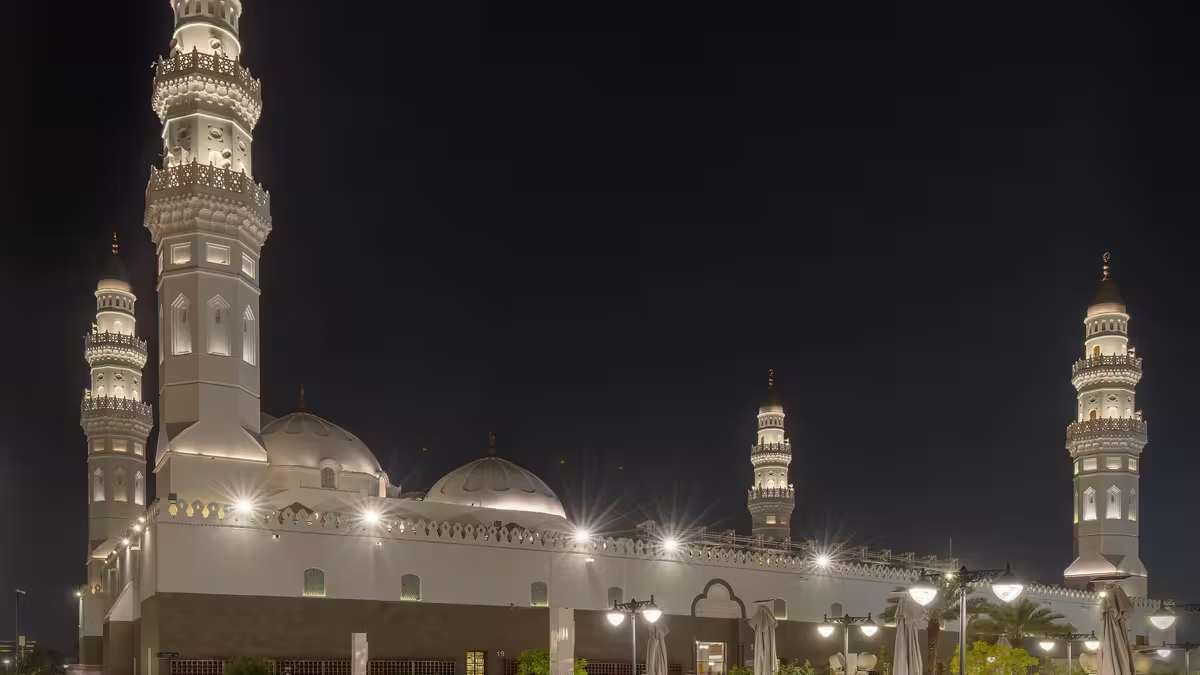
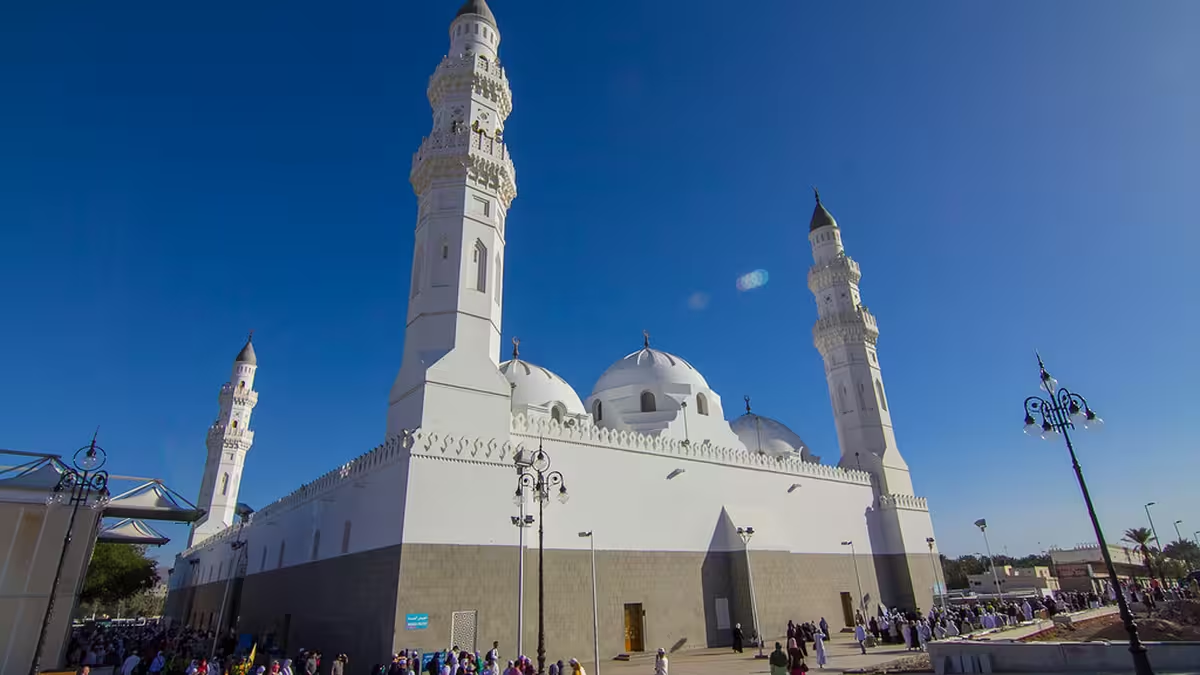
The mosque has been enlarged and rebuilt many times. The present building, designed by the Egyptian architect Abdel-Wahed El-Wakil and completed in 1986, replaced its predecessor entirely; it keeps the ribbed white domes and plain exterior of traditional Madinan building.9 Its complex covers some 13,730 square metres, the largest of the mosques El-Wakil designed in Saudi Arabia.10
From the cave to the mosque
The two verses frame the two places. In the cave the command was to recite in the name of the Lord who created: a word given to one man in solitude. At Qubāʾ the verse speaks of a house for the many, founded on piety from its first day and filled with men who love to purify themselves. The Prophet’s own practice joined them, for the promise of an ʿumrah’s reward rests on the same purification the verse praises: the believer washes at home, walks to Qubāʾ, and prays in the first mosque of a religion that began with the word iqraʾ (ٱقْرَأْ, recite).
Further reading: The stations of the Hajj, Islam, Madinah.
Notes
- Ṣaḥīḥ al-Bukhārī 3, narrated by ʿĀʾishah; cf. Ṣaḥīḥ al-Bukhārī 4953. ↩
- Qur’an 96:1-5, trans. Saheeh International; Arabic text from Quran.com. ↩
- A. A. Macca and T. Aryanti, “The Domes: El Wakil’s Traditionalist Architecture of Quba Mosque,” IOP Publishing, 2017, as catalogued by Asfaar; cf. the Encyclopedia of Translated Prophetic Hadiths (Sunnah.global), explanation to the hadith of Ibn ʿUmar on Qubāʾ. ↩
- Ṣaḥīḥ al-Bukhārī 1193, narrated by Ibn ʿUmar; cf. Ṣaḥīḥ Muslim 1399g. ↩
- Sunan Ibn Mājah 1412; Jāmiʿ al-Tirmidhī 324, graded ḥasan. ↩
- Qur’an 9:108, trans. Saheeh International; Arabic text from Quran.com. ↩
- Ṣaḥīḥ Muslim 1398a, narrated by Abū Saʿīd al-Khudrī. ↩
- Sunan al-Nasāʾī 698, with the commentary of Ḥāfiẓ Muḥammad Amīn. ↩
- “Quba Mosque,” Madain Project. ↩
- Mohammad al-Asad, “The Mosques of Abdel Wahed El-Wakil,” as reproduced by Asfaar. ↩